
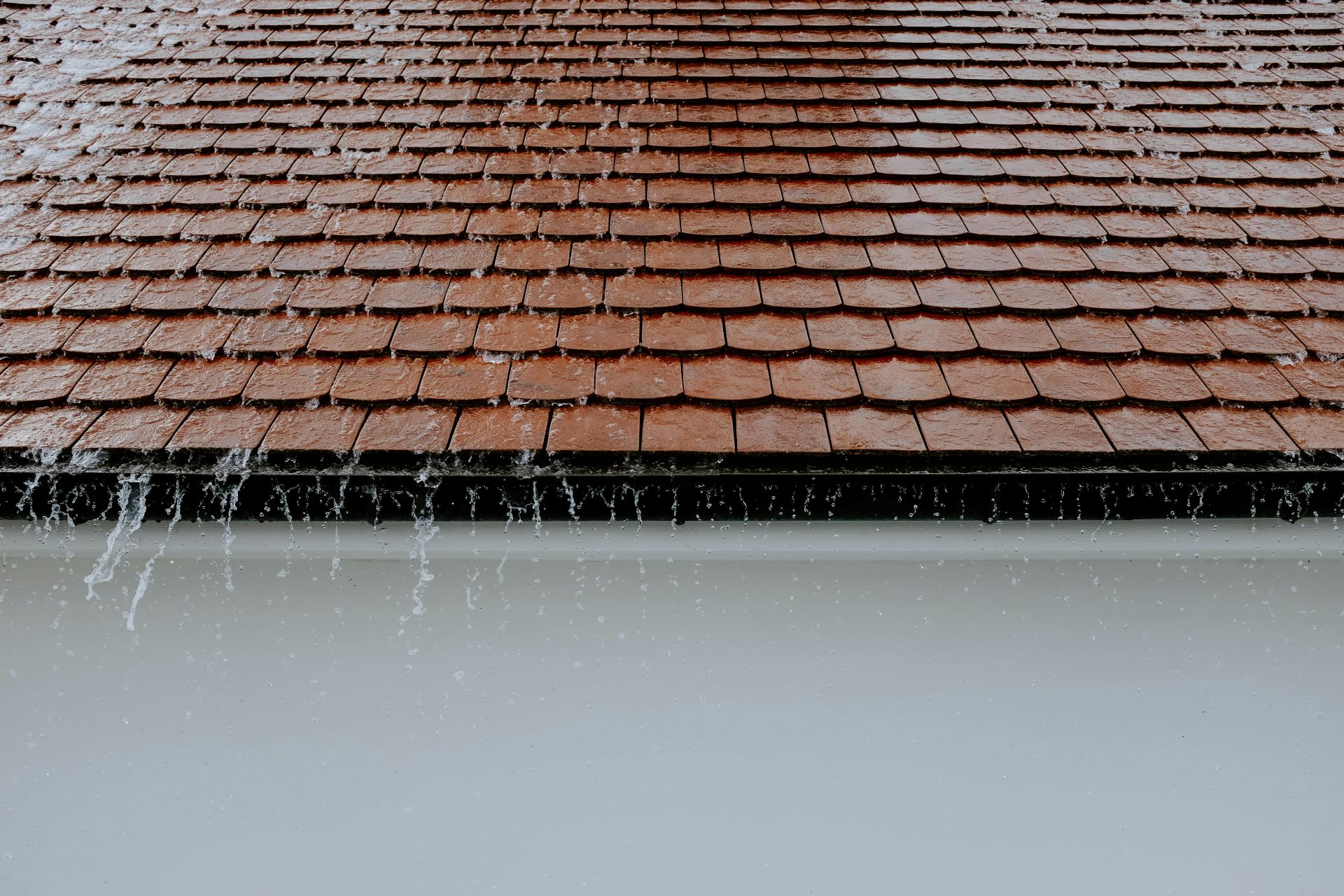
Why Roof Inspections Should Happen Before Every Rain Season
The Quiet Logic of Timing in Roofing Maintenance
In South Africa, roofs do not fail all at once. They unravel slowly, then suddenly, like a seam giving way under strain just when the skies open. The rain season does not create weaknesses in a roof; it exposes them.
That is why timing matters as much as technique in construction maintenance. A roof inspected in dry weather behaves like a predictable system. A roof left unchecked until the first storm behaves like a gamble with architecture as the wager.
Across Johannesburg, Pretoria, Durban, and the Western Cape, rainfall patterns vary, but the principle remains steady. Pre-season inspections are not optional upkeep. They are climatic preparation, a structural rehearsal before environmental stress arrives.
South Africa’s Climate and the Pressure on Roof Systems
South African roofs exist under a layered climate load. High UV exposure, sudden thermal shifts, coastal humidity, hail events in the Highveld, and seasonal downpours all contribute to material fatigue.
Over time, this creates a cumulative effect. Waterproofing membranes lose elasticity. Fasteners loosen under expansion and contraction. Tiles shift slightly out of alignment. Gutters clog with windborne debris.
What makes this particularly important locally is the intensity of seasonal rainfall. As highlighted in roofing maintenance guidance for South African conditions, storm cycles are often short but severe, meaning failure points are tested rapidly rather than gradually :contentReference[oaicite:0]{index=0}.
A roof may appear stable in dry months while quietly holding vulnerabilities that only express themselves when water pressure increases.
Why the Rain Season Is the Real Stress Test
Rain does not just fall on a roof. It moves through it.
Water exploits micro-gaps that are invisible during dry conditions. A cracked flashing joint becomes a channel. A clogged gutter becomes a backflow system. A lifted tile becomes an entry point for wind-driven rain.
Once water enters, it rarely stays in one place. It migrates along beams, insulation layers, and ceiling cavities. By the time interior staining appears, the damage has already spread beyond the entry point.
This is why pre-season inspection is less about roofing and more about hydrodynamics. It is an attempt to map how water will behave before it arrives.
The Maintenance Gap Between Design and Reality
Even well-designed roofing systems do not maintain their original performance indefinitely. Construction design assumes ideal installation conditions and predictable material behaviour. Reality introduces vibration, debris, weather extremes, and ageing.
Over time, that gap widens.
A waterproofing membrane specified for ten years may begin to show fatigue in year six depending on exposure. Sealants designed for expansion may harden under UV stress. Fixings installed correctly may loosen due to repeated thermal cycling.
This divergence between intent and performance is where most building failures originate. Not from catastrophic defects, but from gradual drift.
Pre-rain inspections are the corrective mechanism that narrows this gap before it becomes visible damage.
What Seasonal Roof Inspections Actually Reveal
A proper pre-rain inspection is not a surface glance. It is a diagnostic pass over the building envelope.
Common findings include early-stage issues that are easy to ignore but costly to postpone:
- minor tile displacement from wind uplift
- sealant shrinkage around chimneys and vents
- gutter sediment buildup restricting flow capacity
- corrosion forming under metal flashings
- micro-cracks in waterproofing layers exposed to UV fatigue
Industry maintenance guides consistently emphasise that these small faults are the earliest indicators of larger system failure if left unresolved :contentReference[oaicite:1]{index=1}.
In practical terms, the inspection is not about finding damage. It is about intercepting it before it scales.
Seasonal Scheduling as a Maintenance Strategy
Roof care is most effective when structured around seasonal stress cycles rather than reactive timelines.
In South African conditions, this typically means two critical inspection windows:
- late winter, before spring rains intensify
- late spring or early summer, before peak storm activity
This rhythm aligns maintenance work with predictable environmental pressure points. It also allows repairs to be completed in stable weather, where sealing compounds cure properly and contractors can work safely.
Seasonal scheduling also reduces emergency interventions, which are typically more expensive, disruptive, and structurally invasive.
Water Behaviour: Why Small Defects Become Large Failures
Water is not destructive by force alone. It is destructive by persistence.
A pinhole leak in waterproofing may not drip visibly. Instead, moisture spreads laterally beneath the surface layer. Over days and weeks, insulation becomes saturated. Timber begins to swell. Electrical conduits can be affected in severe cases.
By the time the leak is visible indoors, the system has already absorbed repeated cycles of wetting and drying.
This is why maintenance professionals often describe roofing issues as “hidden progression systems” rather than isolated defects.
Pre-season inspections interrupt that progression early.
The Role of Gutters and Drainage in Rain Preparedness
Roof performance is inseparable from drainage performance.
Even a structurally sound roof can fail if water has nowhere to go. Blocked gutters, undersized downpipes, or poorly graded flat roofs create standing water conditions that accelerate deterioration.
Standing water is particularly damaging because it extends exposure time. Instead of shedding rain quickly, the roof becomes a temporary reservoir.
This is especially relevant in high-intensity rainfall regions where sudden downpours overwhelm marginal drainage systems.
A pre-rain inspection that ignores drainage is incomplete by definition.
Material Behaviour Under Seasonal Stress
Different roofing materials respond differently to seasonal change:
Metal roofs expand and contract rapidly under heat variation, stressing fasteners and seams.
Concrete tiles absorb moisture over time, increasing weight loads and potential slippage.
Flat membrane systems are vulnerable to UV degradation followed by ponding stress during rain events.
These behaviours are predictable, but only if they are monitored across time. Seasonal inspection provides that continuity.
Without it, material fatigue becomes invisible until failure occurs.
Why South African Buildings Are Particularly Vulnerable
Local conditions amplify roofing stress in three distinct ways.
First, UV intensity accelerates surface degradation of coatings and sealants.
Second, rainfall patterns often arrive in concentrated bursts rather than steady precipitation, increasing instantaneous load on drainage systems.
Third, temperature swings between day and night contribute to repeated expansion cycles in roofing materials.
Together, these create a maintenance environment where time is not neutral. Time actively contributes to wear.
This makes pre-rain inspections not just advisable, but structurally strategic.
The Cost Curve of Preventive Maintenance
Roofing maintenance follows a simple but unforgiving cost curve.
Early detection leads to minor repairs: resealing, tightening, cleaning.
Late detection leads to structural intervention: membrane replacement, timber repair, interior restoration.
The financial difference is not incremental. It is exponential.
A blocked drain cleared in inspection might prevent ceiling replacement. A cracked tile replaced early might prevent internal water migration across multiple rooms.
The logic is consistent across building types, from residential homes to commercial structures: prevention is cheaper than restoration.
Professional Inspections Versus Visual Assumptions
One of the most common maintenance errors is relying on visual certainty.
A roof that “looks fine” is not necessarily functioning correctly. Many failures originate beneath the visible surface layer, particularly in waterproofing systems and layered assemblies.
Professional inspections typically include:
- surface condition assessment
- flashing integrity checks
- drainage flow verification
- moisture ingress detection
- structural alignment review
This layered approach reduces reliance on surface-level interpretation and increases diagnostic accuracy.
Building Resilience Through Seasonal Discipline
Roof maintenance is often treated as a reactionary task. In reality, it is a rhythm.
Buildings that follow seasonal inspection cycles tend to show longer service life, fewer emergency repairs, and more stable performance under weather stress.
In South Africa’s climate context, this discipline becomes a form of resilience engineering. Each inspection strengthens the building’s ability to withstand the next environmental cycle.
Over time, the roof becomes less of a vulnerable surface and more of a managed system.
Preparing the Roof Before the Sky Changes
The rain season does not arrive quietly. It announces itself through pressure shifts, humidity changes, and wind patterns long before the first drop falls.
A roof that has been inspected beforehand enters that season prepared. A roof that has not enters it exposed.
Seasonal inspection is not about predicting weather. It is about ensuring that when weather arrives, the building is ready to respond rather than react.
In the South African construction landscape, that difference defines whether a roof simply exists or performs as intended.