
Understanding Structural Load Distribution in Modern Buildings
The Quiet Physics of Buildings
Every building is an agreement between human ambition and gravity’s patient persistence. When people walk into an office block in Sandton, park under a shopping centre roof in Pretoria, or rest inside a suburban home in the Western Cape, they trust that invisible engineering is working continuously above and around them. Structural load distribution is the language through which that trust is maintained. It is not a loud science. It does not announce itself with dramatic noise or theatrical warning. Instead, it operates like the slow breathing of stone, steel and reinforced concrete, carrying weight safely toward the earth while allowing architecture to remain open, functional and beautiful.
Construction practices in South Africa are influenced by safety frameworks and technical standards developed within the industry, including guidance aligned with the principles of the South African Bureau of Standards. These standards help ensure that materials, workmanship and structural calculations remain consistent across different regions, whether the building stands beside coastal wind corridors or within inland urban environments. For property owners, maintenance teams and construction professionals, understanding load distribution is not merely an academic exercise. It is a practical necessity that protects investments, human lives and the longevity of infrastructure.
The Meaning of Structural Load Distribution
Structural load distribution refers to the process by which forces acting on a building are transferred from points of origin down through supporting elements until the forces are safely dispersed into the ground. Gravity is the primary actor in this story, pulling constantly on every component of a structure. However, gravity is not the only contributor to structural stress. Human activity, furniture placement, mechanical equipment, wind pressure and temperature fluctuations all contribute to the total load that a building must manage over its lifespan.
Buildings function best when loads are shared evenly among structural members. When weight is concentrated in isolated areas, stress zones begin to form. These zones behave like emotional pressure points inside materials, slowly encouraging microscopic deformation. Over long periods, repeated stress can lead to visible deterioration such as cracking, material fatigue or joint separation. South Africa’s diverse climate conditions, ranging from coastal humidity to inland dryness, further influence how materials respond to structural stress. Moisture cycles can expand and contract building components subtly, adding additional complexity to load behaviour.
For maintenance professionals, recognising that structural load distribution is dynamic rather than static is essential. A building that was safe when constructed may gradually drift away from optimal performance if usage patterns change, if renovations alter internal wall configurations, or if heavy equipment is introduced without structural evaluation.
How Weight Travels Through a Building
The journey of structural load begins at the surfaces where forces are applied. Roofs collect environmental loads such as rainwater accumulation, wind uplift pressure and sometimes maintenance traffic. Floors collect human movement forces, furniture weight and storage pressure. These forces do not remain where they originate. Instead, they move into horizontal structural members that are designed to accept and redirect them.
Beams play a central role in this process. They act as horizontal conduits that gather load energy from surfaces and carry it toward vertical structural supports. Inside reinforced concrete buildings common across South African cities, steel reinforcement bars embedded within concrete beams help manage tensile forces that would otherwise cause cracking under bending stress. Over time, beams may experience slow material fatigue if moisture penetration encourages corrosion of internal reinforcement steel. Coastal regions are particularly sensitive to this phenomenon because salt-laden air can accelerate chemical reactions inside exposed microfractures.
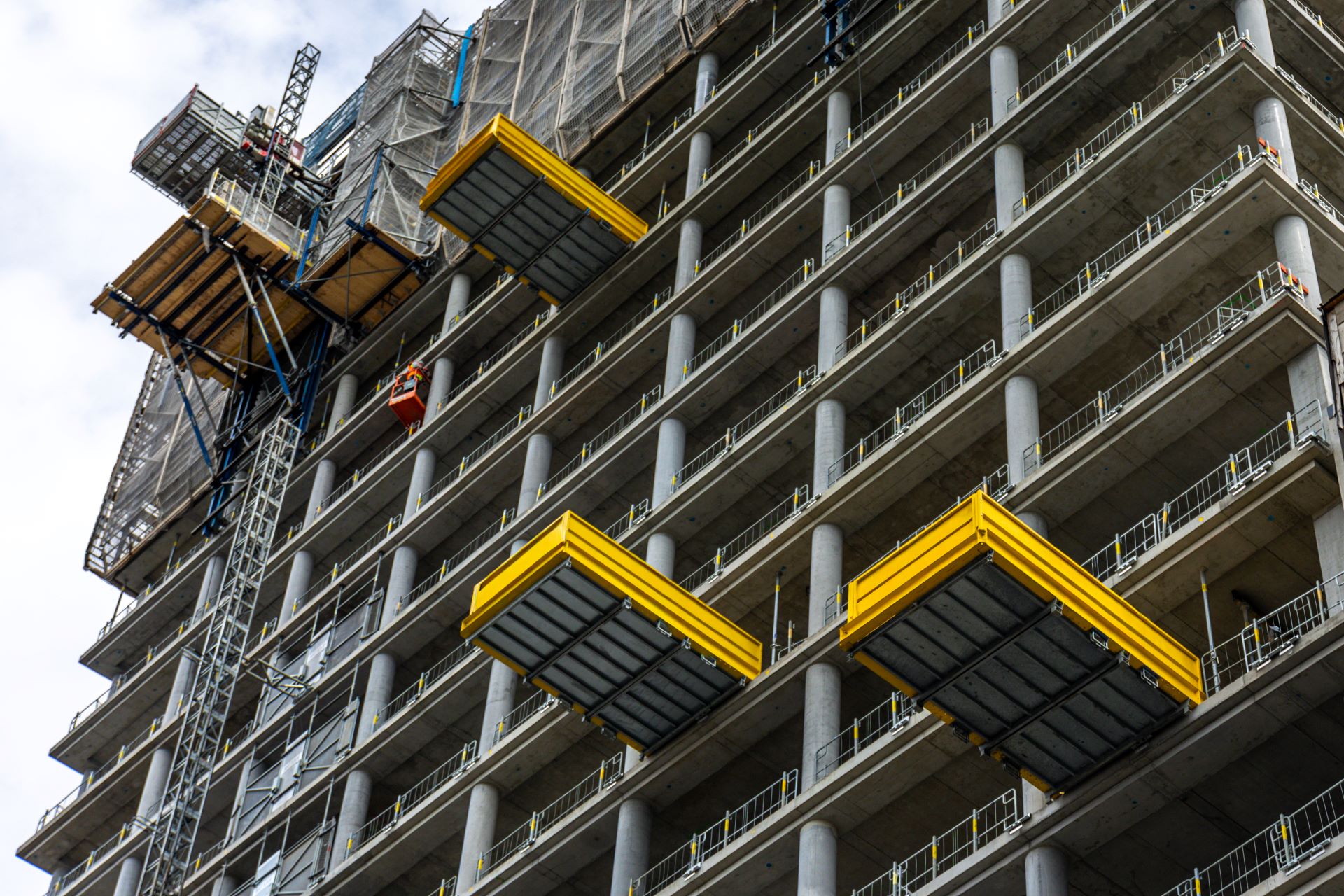
Columns then receive the weight delivered by beams. Columns are primarily compression members, meaning they resist forces that attempt to shorten or crush them vertically. The geometry of a column is therefore important. Even small deviations from vertical alignment can create eccentric loading, which introduces bending stress in addition to compression. During building maintenance inspections, monitoring column alignment and surface integrity is crucial because column damage is often a precursor to broader structural instability.
Finally, foundations complete the journey by spreading load forces across soil or rock formations beneath the building. Foundation engineering in South Africa must account for geological diversity. Some inland areas contain expansive clay soils that swell during moisture absorption and shrink during dry seasons. Such movement can exert unpredictable pressure on foundation walls. Coastal regions may have sandy soil structures that require specialised compaction and stabilisation techniques to maintain load-bearing reliability.
Beams as Horizontal Strength Channels
Beams are sometimes misunderstood as simple structural elements, but their engineering role is remarkably sophisticated. A beam must balance multiple competing forces simultaneously. When weight is applied to a beam, the upper portion of the beam experiences compression while the lower portion experiences tension. Reinforced concrete construction addresses this dual behaviour by embedding steel reinforcement in strategic positions inside the concrete matrix.
In South African residential developments, beams are often hidden behind ceilings or wall finishes, which can create maintenance challenges. Because beams are not always visible, deterioration may progress unnoticed unless routine inspection schedules are followed. Moisture penetration is one of the primary threats to beam integrity. When water enters through roof leaks or poorly sealed exterior joints, it can travel slowly through microscopic pores inside concrete structures. Over time, this moisture can reach steel reinforcement components and initiate corrosion processes.
Corrosion is particularly dangerous because it expands material volume internally. Rust formation on steel reinforcement bars can increase internal pressure inside concrete, leading to surface cracking and eventual spalling where pieces of concrete detach from the structure. Property managers should treat unexplained beam cracking with seriousness rather than cosmetic repair, because superficial patching without addressing underlying moisture sources will only delay deterioration.
Columns and Vertical Load Guardians
Columns are the silent guardians of vertical structural stability. While architectural design often celebrates aesthetic elements such as façade finishes or interior décor, columns perform the less glamorous but more critical function of maintaining structural posture. In commercial South African buildings, reinforced concrete columns are widely used because they provide a reliable balance between construction cost and long-term durability.
Column maintenance requires understanding how human modifications can unintentionally compromise structural safety. Renovation projects sometimes involve removing internal walls to create open office spaces or commercial showrooms. If those walls were originally part of the load distribution system, their removal can transfer weight to columns that were never designed to carry additional stress.
Cracking patterns on columns provide valuable diagnostic information. Vertical cracks may suggest compressive overload, while diagonal cracking patterns can indicate shear stress or foundation movement influences. Cracks located near column bases are particularly concerning because they may signal foundation settlement or moisture-related weakening of material strength.
Owners should resist the temptation to add heavy storage systems, mechanical equipment or water tanks on upper floors without professional structural evaluation. What appears to be a convenient spatial decision can quietly reshape load pathways inside the building.
Load Paths: The Invisible Architecture Inside Architecture
Load paths function like rivers flowing invisibly through solid material landscapes. They describe the exact trajectory that structural forces follow from point of application to foundation absorption. When buildings are designed properly, load paths are predictable and smooth, allowing stress energy to dissipate evenly.
Problems arise when renovation work interrupts these natural flow patterns. Removing interior walls, drilling large openings for service installations, or adding unapproved structural fixtures can create discontinuities in load paths. In older South African commercial properties, this risk is particularly relevant because buildings may have undergone multiple usage transformations over decades.
A retail space may become an office, an office may become a storage facility, and storage facilities may later be converted into mixed-use environments. Each transformation potentially changes how weight is distributed across structural members. Professional engineering assessment is therefore essential before major layout modifications are implemented.
Understanding load paths also helps maintenance teams identify unusual behaviour such as unexpected floor vibration or door frame distortion. These symptoms often indicate that internal structural equilibrium has shifted subtly over time.
Environmental Stress and Wind Pressure Effects
South Africa’s geographical position creates unique structural challenges related to wind pressure and thermal cycling. Coastal urban centres frequently experience strong seasonal wind systems that can place repetitive stress on building envelopes. Wind does not merely push against walls; it creates complex pressure differentials across surfaces.
Roofing systems are particularly vulnerable to wind uplift forces. If roofing sheets are inadequately fastened or if support brackets have degraded due to corrosion, wind oscillation can gradually loosen structural connections. Maintenance inspections should therefore include evaluation of fastening integrity, sealant condition and structural anchoring systems.
Temperature variation also contributes to structural movement. Materials expand when heated and contract when cooled. Over long timeframes, repeated thermal cycling can influence joint performance and surface cracking behaviour. South African regions that experience hot daytime temperatures followed by cooler nights may observe more pronounced thermal stress patterns.
Maintenance Practices for Structural Longevity
Structural maintenance is fundamentally a prevention strategy rather than a repair strategy. Property managers who wait until damage is visually obvious often face significantly higher repair costs compared to those who implement routine monitoring programmes.
Water management is one of the most important maintenance considerations. Roof gutters must remain clear of debris so that rainwater does not pool or overflow into structural joints. Foundation drainage systems should direct moisture away from load-bearing walls. Even small persistent water leaks can slowly migrate into structural cavities where they weaken material cohesion.
Crack repair should always be approached carefully. Cosmetic sealing of cracks without identifying the cause of cracking can create false structural security. Engineers often prefer diagnostic testing before performing permanent repairs because crack behaviour provides information about internal stress dynamics.
Commercial buildings that support heavy business activity require more frequent structural monitoring than residential properties. Warehouse environments, in particular, must ensure that storage racks are installed within design load limits. Excessive vertical stacking of goods can create localised pressure zones that exceed structural tolerance levels.
Professional Responsibility and Documentation
Structural safety is ultimately a shared responsibility between property owners, construction professionals and maintenance teams. Keeping detailed records of structural modifications, inspection reports and repair work helps preserve institutional knowledge about the building’s history.
In South Africa’s urban development landscape, regulatory compliance is also an ethical obligation. Buildings that host multiple occupants carry additional moral responsibility because structural failure can affect large numbers of people simultaneously.
Qualified structural engineers should be consulted whenever major load-bearing components are altered or when unusual structural behaviour is observed. Attempting to solve structural problems through informal or unverified methods can create hidden hazards that emerge later under stress.
Living with Gravity
Architecture is humanity’s conversation with the earth’s relentless pull. Structural load distribution is the grammar that keeps that conversation meaningful and safe. Buildings are not static objects frozen in time. They are slowly evolving systems influenced by weather, human activity and material aging.
In South Africa, where urban expansion continues alongside maintenance challenges, understanding how weight travels through beams, columns and foundations is essential for sustainable development. When structural systems are respected, buildings can endure for generations, carrying stories, businesses and families inside their protective geometry.
Good structural maintenance is not dramatic. It is patient, respectful and precise. Like a watchful engineer listening to the quiet heartbeat of concrete and steel, it ensures that every kilogram of human ambition finds its way safely back to the ground.