
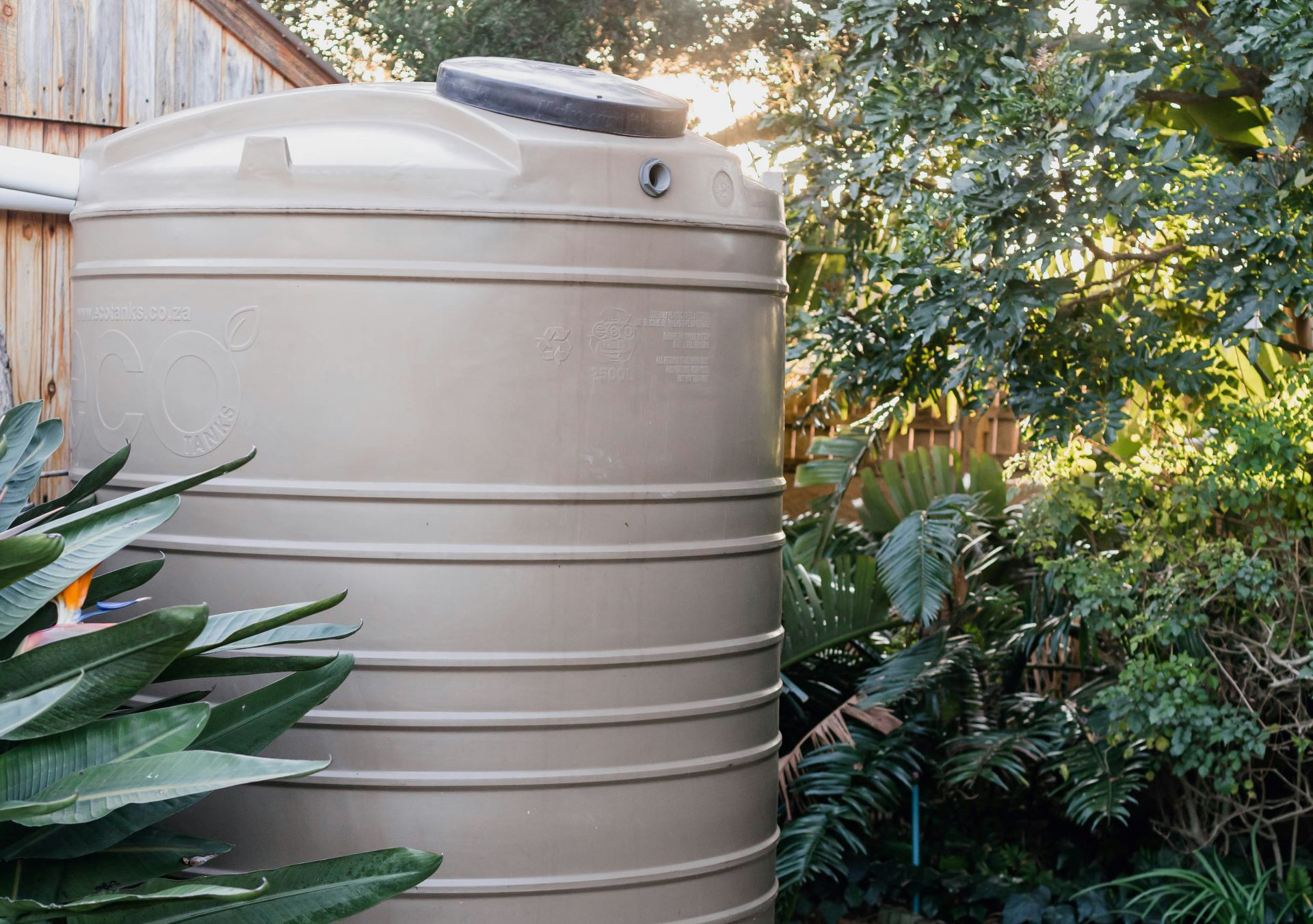
Smart Water Tank Installation for Reliable Home Supply
Planning Household Water Security in South Africa
Reliable water access has become a serious household design consideration across many parts of South Africa. Municipal supply interruptions are no longer rare inconveniences but recurring realities in several urban and peri-urban areas. Cities such as Johannesburg and Tshwane have experienced pressure on ageing infrastructure, while rapidly growing residential demand continues to test system resilience.
Water tank installation offers a practical engineering response to uncertainty in supply networks. Rather than treating storage as an emergency measure alone, modern household design increasingly treats it as a planned component of domestic infrastructure. The goal is not just storing water, but balancing consumption patterns, storage capacity, and refill reliability.
Capacity planning is at the heart of this approach. Households must first understand their daily consumption requirements before selecting storage volumes. A small family that uses water primarily for drinking and cooking has very different storage needs compared to a household that also maintains gardens, swimming pools, or high-usage appliances.
South African building and plumbing standards also influence installation decisions. Compliance with local municipal bylaws, pressure system requirements, and property layout constraints must be considered before committing to tank positioning or pump integration.
Understanding Municipal Supply Reliability
Water infrastructure performance varies significantly across regions. In certain areas, supply is stable for most of the year, interrupted only by maintenance shutdowns. In others, residents may face pressure fluctuations, load shedding effects on pumping stations, or pipeline failures.
The challenge is especially visible in older metropolitan infrastructure zones. In parts of Cape Town, seasonal demand and environmental factors influence reservoir management, while inland municipalities sometimes struggle with distribution losses.
Households should assess three variables when evaluating supply reliability:
Frequency of interruptions
Average duration of outages
Time of day when pressure reduction is most likely
For example, if water supply typically fails for six hours at night, storage requirements differ dramatically from areas where interruptions can last an entire day.
Local construction professionals often recommend analysing municipal communication patterns as well. Some municipalities publish planned maintenance schedules, giving homeowners an opportunity to align storage planning with known shutdown windows.
The philosophy behind modern storage design is resilience rather than reaction. Instead of rushing to purchase tanks after a disruption occurs, homeowners are encouraged to design storage capacity into the property’s utility system from the start.
Calculating Household Water Consumption
Capacity planning begins with understanding how much water a household actually uses. South African consumption patterns vary based on household size, lifestyle habits, and climate conditions.
A typical middle-income household may consume water in the following approximate ranges:
Drinking and cooking: 20–30 litres per person per day
Showering and personal hygiene: 40–80 litres per person per day
Laundry and cleaning activities: 20–40 litres per day for the entire household
Garden irrigation: Highly variable depending on plant density and season
The sum of these components provides a baseline daily requirement. For example, a family of four might realistically require between 250 and 400 litres per day under moderate usage conditions.
In South African residential construction practice, many installers recommend storing at least two days of supply where municipal reliability is moderate, and three to five days where interruptions are frequent.
Let’s imagine a household of five people living in a suburban property in Durban. If each person uses roughly 70 litres per day including basic hygiene and cooking, the household would require about 350 litres daily.
Planning for three days of autonomy would therefore suggest a storage capacity close to 1000 litres. This figure can be achieved using either a single large tank or a modular system of connected tanks.
Choosing the Right Tank Size and Configuration
Water storage products in South Africa are available in several common volumes. The 1000-litre plastic tank remains one of the most popular residential choices due to its balance between cost and functionality.
However, capacity selection should be guided by usage behaviour rather than market popularity.
Smaller households living in apartments or compact residential developments may opt for 500-litre tanks where space is limited. Larger families or homes with high irrigation demand might require systems exceeding 2000 litres.
Tank configuration is equally important. Vertical tanks save ground space but may require stronger structural support platforms. Horizontal tanks distribute weight more evenly but occupy more surface area.
Material quality should not be overlooked. UV-stabilised polyethylene tanks are commonly used because South Africa’s sunlight intensity can degrade inferior plastics over time. Tanks must also comply with local safety standards and be installed on properly prepared foundations.
Pump Integration and Pressure Management
Storage tanks alone do not guarantee usable water supply inside the house. Pressure management systems are necessary to ensure water reaches taps, showers, and appliances effectively.
Many homes now use automatic pressure pumps connected to storage tanks. When municipal supply is available, the tank may refill passively through float valves. When supply stops, the pump activates to distribute stored water.
Pump selection should match both tank size and property plumbing complexity. A small single-storey house requires different pressure specifications compared to a double-storey residence with rooftop bathrooms.
Electrical reliability also plays a role. Since water pumps depend on power, households in regions affected by electricity outages should consider backup energy systems.
The influence of load shedding cycles cannot be ignored in modern South African housing design. Some homeowners integrate small solar-supported pump systems to maintain basic water circulation during power interruptions.
Rainwater Harvesting as a Supplementary Strategy
Rainwater harvesting is gaining popularity as a complementary water security solution rather than a primary supply replacement.
The South African climate offers good harvesting potential in several regions. Coastal cities such as Port Elizabeth receive moderate rainfall that can be captured from roof surfaces, while highveld summer thunderstorms provide short but intense collection opportunities.
Roof gutter systems channel rainfall into filtration units before entering storage tanks. First-flush diverters are often installed to prevent debris, dust, and bird droppings from entering storage reservoirs.
Harvested rainwater can be used for garden irrigation, toilet flushing, and cleaning purposes. Potable use usually requires additional purification steps.
Property owners should ensure that harvesting installations comply with municipal bylaws since some local authorities regulate external water collection systems.
Installation Positioning and Structural Considerations
Correct positioning is one of the most overlooked aspects of tank installation.
Ground preparation must be done carefully. The foundation surface should be level, compacted, and capable of supporting the full weight of the tank when filled.
Remember that water is deceptively heavy. A 1000-litre tank carries approximately one metric ton of mass when full. If placed on unstable soil or poorly constructed platforms, structural settling may occur.
Installers often recommend concrete slabs reinforced with steel mesh for long-term durability. Elevated stands may be used where gravity feed pressure is required, but these structures must be engineered to resist wind loading and vibration.
Proximity to the main building also matters. Tanks should be close enough to minimise pipe length but far enough to avoid foundation moisture problems.
Maintenance Requirements for Long-Term Performance
Like any building system, water storage installations require periodic maintenance.
Cleaning the tank interior every six to twelve months helps prevent biological growth and sediment accumulation. In South Africa’s warmer regions, algae formation can occur if tanks are exposed to sunlight or if lids are not properly sealed.
Float valves and inlet filters should be inspected regularly. A malfunctioning float valve can lead to overflow waste, which defeats the purpose of storage planning.
Plumbing connections should also be checked for leaks. Even small drip losses can translate into significant water wastage over time, especially during long interruption periods.
Professional plumbers familiar with residential systems can help ensure that seals, pump controls, and electrical components remain in good working condition.
Cost Factors in Residential Water Storage Projects
The cost of installing a household water tank system depends on several variables.
Tank size is the most obvious factor. Larger tanks naturally cost more, but economies of scale sometimes apply to installation labour and plumbing integration.
Pump quality also influences pricing. High-performance pressure pumps generally last longer and offer better performance consistency but require higher upfront investment.
Installation complexity matters as well. Properties with difficult access, rocky soil conditions, or multi-storey plumbing networks may incur additional construction costs.
Homeowners should treat water storage as long-term infrastructure rather than a short-term purchase. A well-installed system can operate for many years with minimal operational expense.
Designing for Future Water Security
South Africa’s urban population continues to grow, placing ongoing pressure on municipal infrastructure. Forward-thinking residential design increasingly treats water storage as essential utility architecture.
Future upgrades should be considered during initial installation. Modular tank systems allow homeowners to add storage capacity later without redesigning plumbing networks.
Smart monitoring technology is also becoming more common. Digital sensors can track water levels and send alerts when reserves drop below predefined thresholds.
Sustainable water management is likely to remain an important aspect of residential construction across regions served by entities such as Rand Water, which supplies bulk water to large parts of Gauteng.
Building Household Resilience Through Planning
Water tank installation is not merely a response to municipal unreliability but a step toward self-sufficiency in domestic living environments. By analysing consumption patterns, supply stability, and structural constraints, homeowners can design systems that protect daily routines from unexpected interruptions.
The modern South African household benefits from viewing water storage as part of the property’s core infrastructure, much like electrical wiring or roofing integrity. Thoughtful capacity planning reduces stress during outages and ensures that essential domestic activities can continue without disruption.
In a country where environmental variability, infrastructure aging, and urban expansion intersect, residential water storage is becoming less of a luxury and more of a practical necessity.
With careful installation, routine maintenance, and realistic capacity assessment, families can transform a simple tank into a quiet guardian of daily comfort, standing watch beside the home like a patient metal sentinel holding a small ocean of certainty against the tides of uncertainty.