
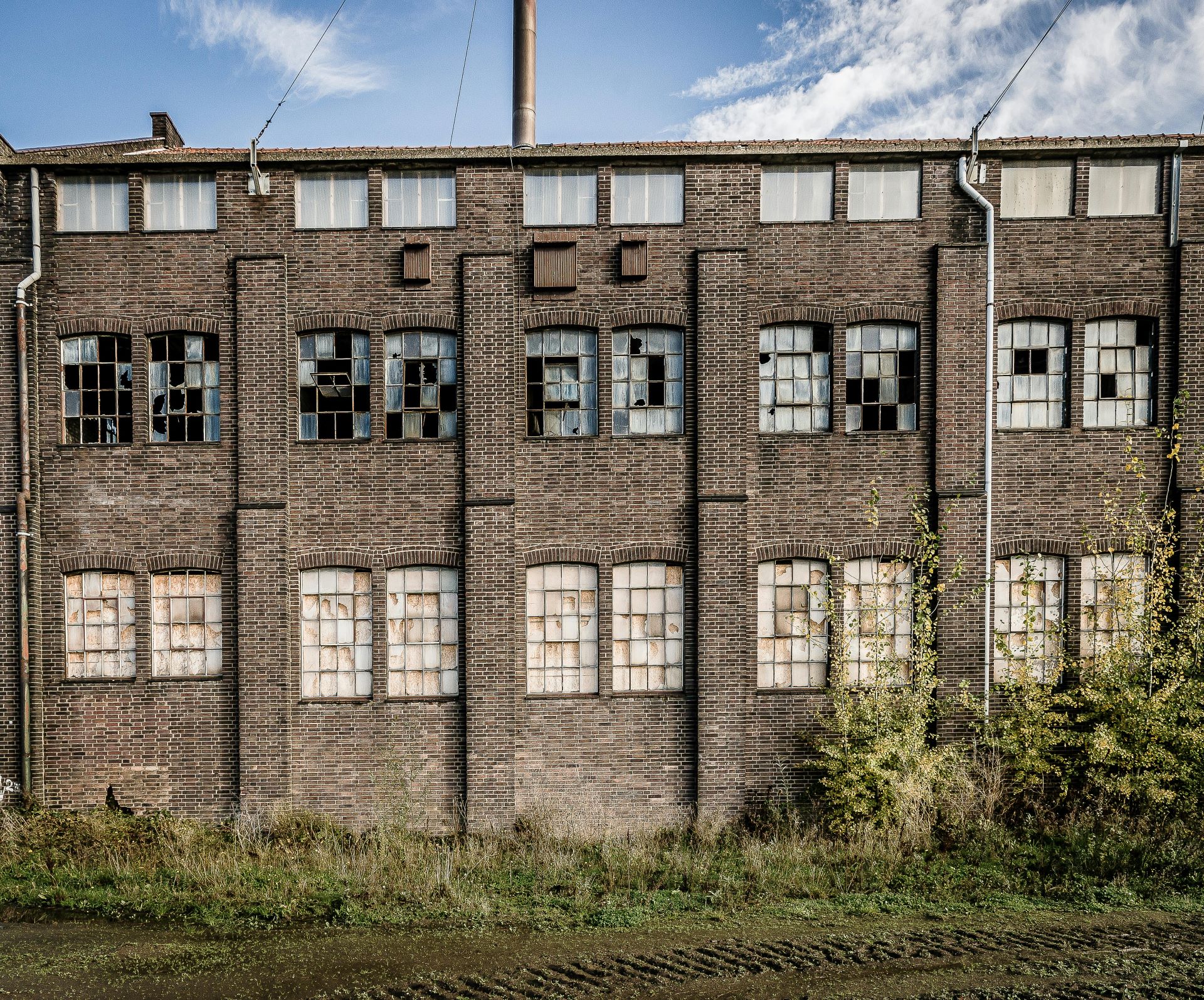
How Neglected Maintenance Shortens Building Lifespan
How Neglected Maintenance Shortens Building Lifespan
A building rarely collapses in one dramatic moment. More often, it unravels slowly, almost politely, like fabric slipping stitch by stitch until the seam finally gives way. In South Africa’s varied climate conditions, from coastal salt-laden air in Durban to dry heat and sudden storms in Gauteng, this process becomes even more pronounced. What begins as a hairline crack, a slightly blocked gutter, or a patch of damp paint can evolve into structural fatigue that quietly shortens a building’s usable life by years or even decades.
The uncomfortable truth is that buildings do not decay in a straight line. They follow a curve, and once that curve starts bending downward, it rarely flattens without intervention.
The Hidden Math of Building Decay
Every structure carries within it a slow-moving equation. On one side is durability: materials, workmanship, and design intent. On the other is exposure: weather, load, time, and human neglect. When a building is well maintained, durability and exposure remain in balance. But when maintenance is delayed or ignored, the equation begins to tilt.
At first, the change is almost invisible. A sealant loses elasticity. A roof tile shifts slightly. A drainage outlet slows. These are not failures yet, but they are deviations from optimal performance.
Over time, these deviations accumulate. Moisture finds entry points. Steel begins to oxidise. Concrete micro-cracks widen under thermal expansion. The building is no longer simply aging; it is accelerating toward failure.
This is where the concept of a degradation curve becomes essential. Instead of a smooth decline, buildings typically experience a slow initial phase, followed by a rapid acceleration of damage once certain thresholds are crossed.
What Degradation Curves Actually Mean
A degradation curve describes how performance decreases over time under the influence of stressors. In ideal conditions, the curve is gentle and predictable. With consistent maintenance, it remains shallow for decades.
However, neglected buildings behave differently. The curve begins to bend downward earlier than expected, then steepens dramatically. This is because deterioration is not additive, it is multiplicative.
A small roof leak does not simply remain a leak. It introduces moisture. Moisture leads to timber swelling, plaster breakdown, and steel corrosion. Each new issue creates conditions for the next.
In engineering terms, systems lose redundancy. In practical terms, the building becomes less capable of absorbing shock. A minor storm that would once have been harmless now triggers visible damage.
South African buildings, especially those exposed to coastal humidity or intense seasonal rainfall, often show this curve more aggressively. The environment does not wait for maintenance schedules.
Early Stage Neglect: The Silent Acceleration
The earliest phase of neglect is dangerous precisely because it is quiet. Nothing looks urgent. Paint still holds colour. Walls remain upright. Doors still close, though perhaps with a slight resistance that is easily ignored.
This is the stage where small issues begin to seed future structural cost.
A blocked gutter, for example, forces rainwater to overflow. Instead of being directed away from the structure, water cascades down exterior walls. Over time, this leads to damp ingress, weakening plaster adhesion and promoting mould growth inside cavities.
A cracked waterproofing membrane on a balcony may only allow a small amount of water through during rain. But each exposure cycle expands the crack slightly. Thermal expansion during hot South African summers accelerates the widening.
The danger is not the severity of each issue, but their persistence. Buildings can tolerate stress. What they cannot tolerate is unresolved stress repeating over time.
Moisture, Climate, and South African Conditions
If there is one dominant force in building degradation in South Africa, it is moisture in all its forms. Coastal salt air, inland thunderstorms, and humidity fluctuations all contribute to material stress.
In coastal regions like the Western Cape and KwaZulu-Natal, salt particles accelerate steel corrosion through electrochemical reactions. Reinforced concrete structures are particularly vulnerable once chloride ions penetrate protective layers. What begins as surface staining eventually becomes internal reinforcement expansion, leading to cracking and spalling.
In Gauteng, heavy summer storms introduce rapid water loading into drainage systems. Buildings with poor maintenance often fail not because they are structurally weak, but because water is not properly managed. Overflowing gutters, blocked stormwater channels, and deteriorated roof flashing all contribute to systemic water intrusion.
Thermal variation adds another layer. South African climates often swing between intense heat and sudden cold fronts. Materials expand and contract, and over time, these cycles widen existing cracks.
Moisture is not just an intruder. It is an accelerator.
Structural Systems Under Time Pressure
Every building consists of interconnected systems that rely on balance. Roofs protect walls. Walls support floors. Foundations distribute load into the ground. When one system weakens, others compensate.
This compensation is what eventually leads to accelerated failure.
A roof that begins to leak forces internal ceilings and wall systems to carry moisture stress they were not designed for. Timber trusses may absorb moisture, increasing weight and reducing strength. Ceiling boards deform, altering load distribution.
Similarly, foundation movement caused by poor drainage or soil saturation introduces stress into load-bearing walls. Cracks appear not because the structure was poorly designed, but because environmental control systems failed.
The key insight is that buildings do not fail in isolation. They fail as networks.
Once one node in the system is compromised, stress redistributes. If maintenance does not restore balance, the redistribution becomes permanent.
The Compounding Effect: When Small Issues Multiply
Compounding is the central mechanism behind structural degradation. It is also the most misunderstood.
A single defect is rarely catastrophic. But defects rarely remain single.
Consider a minor window seal failure. Initially, it allows small air and moisture infiltration. Over time, this leads to condensation within wall cavities. Insulation becomes less effective. Energy efficiency drops, leading occupants to increase heating or cooling usage. Increased internal temperature variation places further stress on building materials.
What began as a simple seal issue evolves into a thermal regulation problem, a moisture problem, and eventually a structural integrity concern.
Compounding also introduces feedback loops. Damp areas attract mould, which accelerates material decay. Weakened materials allow more moisture ingress. The system feeds itself.
In South African residential and commercial buildings, this effect is often visible in older properties where maintenance has been sporadic rather than systematic. The building does not deteriorate evenly. It deteriorates in clusters.
Case Scenarios: How Neglect Escalates in Reality
In suburban Johannesburg, a commercial office building with minor roof drainage issues begins to show internal ceiling stains after seasonal rains. At first, maintenance is delayed due to budget cycles. Within two years, electrical conduits above ceiling tiles begin to corrode. Flickering lights become common, and intermittent power faults emerge.
In a coastal Durban apartment block, protective paint layers on exterior steel balustrades are not renewed on schedule. Initially, only small rust spots appear. Over time, corrosion spreads beneath the paint layer, lifting it away from the surface. Eventually, structural integrity of the railing becomes compromised, requiring full replacement rather than simple repainting.
In Cape Town, a residential property near a high rainfall zone experiences repeated minor roof leaks. Each leak is patched individually rather than the root cause being addressed. After several seasons, timber roof trusses begin to warp due to repeated wetting and drying cycles, leading to sagging roof lines and expensive structural remediation.
These are not failures of design. They are failures of continuity.
Maintenance Delay as a Financial Multiplier
The financial impact of neglected maintenance rarely scales linearly. Instead, it behaves like a multiplier effect.
Early intervention costs are typically limited to surface-level repairs. Sealants, coatings, minor replacements. These are relatively low-cost actions that preserve system integrity.
Delayed intervention, however, often escalates into invasive repair. Instead of sealing a crack, sections of concrete may need to be removed and recast. Instead of replacing a membrane, entire waterproofing systems must be rebuilt. Instead of repainting, corrosion-damaged steel may require reinforcement or replacement.
This shift represents a transition from maintenance expenditure to capital expenditure.
In South African property markets, this distinction is critical. Buildings with strong maintenance histories retain value and perform predictably. Those with neglected histories often experience accelerated depreciation, even if their original construction quality was high.
Materials Speak: Concrete, Steel, Timber
Each material in a building responds differently to neglect, but all respond eventually.
Concrete is often perceived as permanent, yet it is porous. Once micro-cracks form, moisture ingress becomes inevitable. Over time, carbonation reduces its alkalinity, allowing steel reinforcement inside to corrode.
Steel is strong but vulnerable to oxidation. Without protective coatings, especially in humid or coastal environments, corrosion progresses beneath surfaces where it is less visible. By the time rust appears externally, internal degradation may already be advanced.
Timber is sensitive to moisture cycles. Repeated exposure to damp conditions leads to swelling, shrinkage, and eventual structural weakening. Insects such as termites, common in many South African regions, further accelerate degradation when maintenance lapses.
These materials do not fail suddenly. They respond gradually, then decisively.
Why Buildings Don’t Fail Linearly
Linear thinking assumes that damage accumulates at a steady rate. Reality is more complex. Buildings operate as dynamic systems influenced by feedback, thresholds, and environmental interaction.
A structure may appear stable for years, even as internal degradation quietly progresses. Then, once a threshold is crossed, performance drops rapidly.
This is often mistaken for sudden failure, but it is actually the visible stage of long invisible deterioration.
For example, a roof may function adequately until a certain percentage of its waterproofing capacity is lost. Beyond that point, water ingress increases exponentially, not incrementally.
The same applies to structural members under corrosion stress. Once reinforcement cross-sectional area is reduced beyond a threshold, load-bearing capacity declines rapidly.
This is the essence of the degradation curve. Stability followed by acceleration.
The Point of No Return
There is a stage in building deterioration where restoration becomes significantly more complex than replacement. This is the point where multiple systems have degraded simultaneously.
At this stage, repairs no longer restore original performance. They only stabilize decline.
In practical terms, this might involve widespread concrete spalling, systemic roof failure, or deep structural cracking that affects load paths. Interventions become invasive, expensive, and disruptive.
South African property owners often encounter this stage unexpectedly because early warning signs were not treated as interconnected symptoms.
A damp wall was treated as a painting issue. A roof leak was treated as a roofing issue. Electrical faults were treated as isolated incidents. Only later does the system-wide nature of the problem become apparent.
Prevention as a System, Not a Task
Effective maintenance is not a checklist. It is a system of continuous observation, intervention, and correction.
Buildings that perform well over decades typically share one trait: they are managed with awareness of interdependence. Roof systems are not separated from drainage systems. Structural monitoring is not isolated from waterproofing strategy. Moisture control is integrated into overall asset management.
In South Africa, where environmental stressors vary widely across regions, this systems-based approach is especially important.
Preventive maintenance is not about preventing all issues. It is about preventing small issues from becoming connected failures.
Neglected maintenance does not shorten a building’s life in a dramatic, visible way. It does so quietly, through accumulation, compounding, and acceleration.
The degradation curve explains why buildings often appear stable until they suddenly are not. Beneath that apparent stability is a network of small failures interacting over time.
In the South African context, where climate conditions actively contribute to material stress, maintenance is not optional stewardship. It is structural insurance against time itself.
A building is never simply standing still. It is either being preserved or being allowed to slowly unravel. And in that slow unraveling, the curve always bends in one direction.