How Corrosion Weakens Reinforced Concrete Structures
Reinforced concrete is one of the most widely used construction materials in South Africa. From residential homes and apartment blocks to bridges, parking structures, industrial facilities, and commercial developments, reinforced concrete forms the backbone of much of the country's built environment.
The strength and durability of reinforced concrete come from the combination of two materials that complement one another. Concrete performs exceptionally well under compression, while embedded steel reinforcement provides the tensile strength needed to resist bending and structural movement. Under normal conditions, the concrete surrounding reinforcing steel creates an alkaline environment that protects the steel from corrosion.
However, this protection does not last forever. Environmental exposure, poor construction practices, inadequate maintenance, and aging infrastructure can all contribute to the deterioration of reinforced concrete. Once corrosion begins to affect reinforcing steel, the structural integrity of the entire element can be compromised.
Corrosion is one of the most common and costly causes of structural deterioration in reinforced concrete structures worldwide. In South Africa, factors such as coastal conditions, industrial pollution, fluctuating temperatures, water ingress, and inconsistent maintenance accelerate the problem in many regions.
Understanding how corrosion develops, how it affects structural performance, and how it can be prevented is essential for property owners, facility managers, contractors, engineers, and maintenance professionals responsible for protecting buildings and infrastructure.
Understanding Reinforced Concrete
To understand the impact of corrosion, it is important to understand how reinforced concrete functions.
Concrete contains cement, aggregates, water, and various additives. Once cured, it develops significant compressive strength. Unfortunately, concrete has relatively low tensile strength, making it vulnerable to cracking when subjected to bending forces.
Steel reinforcement bars, commonly known as rebar, are embedded within concrete to address this limitation. The steel absorbs tensile forces while the concrete handles compressive loads.
The bond between concrete and steel is critical. This bond allows loads to be transferred efficiently throughout the structure. Reinforced concrete beams, slabs, columns, foundations, retaining walls, and bridges all depend on this interaction to perform safely.
When corrosion affects the steel reinforcement, both the steel itself and the surrounding concrete begin to deteriorate, disrupting the structural relationship that gives reinforced concrete its strength.
Why Reinforcing Steel Corrodes
Although reinforcing steel is embedded within concrete, it is not immune to corrosion.
Fresh concrete creates a highly alkaline environment with a pH level generally above 12. This alkalinity forms a passive protective layer around the steel, preventing rust formation.
Problems arise when this protective environment is compromised.
Several mechanisms can destroy the passive layer and expose the steel to corrosion.
Carbonation
Carbonation occurs when carbon dioxide from the atmosphere penetrates the concrete and reacts with compounds within the cement matrix.
Over time, this chemical reaction lowers the concrete's pH level. Once the carbonation front reaches the reinforcing steel, the passive protective layer breaks down, making corrosion possible in the presence of moisture and oxygen.
Carbonation is particularly common in older structures and buildings where concrete cover is inadequate.
Chloride Ingress
Chlorides are among the most aggressive causes of reinforcement corrosion.
In coastal areas of South Africa, airborne salt particles can penetrate concrete surfaces over time. Chlorides may also enter concrete through contaminated materials, groundwater exposure, or de-icing chemicals in certain environments.
Once chloride concentrations reach a critical threshold near the reinforcement, corrosion can begin even if the concrete remains highly alkaline.
Water Penetration
Water is essential for the corrosion process.
Cracks, construction defects, porous concrete, failed waterproofing systems, and damaged protective coatings allow water to enter the structure.
Persistent moisture significantly increases corrosion risks by providing the conditions required for electrochemical reactions to occur.
Industrial Pollution
Many industrial regions throughout South Africa experience elevated levels of airborne contaminants.
Sulphur compounds, acidic pollutants, and chemical emissions can accelerate concrete deterioration and contribute to reinforcement corrosion.
Structures located near factories, processing plants, mining operations, and heavy industrial zones often face higher corrosion risks.
The Corrosion Process Explained
Corrosion of reinforcing steel is an electrochemical process.
When steel loses its protective passive layer and is exposed to oxygen and moisture, anodic and cathodic reactions begin to occur on the steel surface.
Iron atoms are converted into iron ions, releasing electrons that participate in electrochemical reactions.
The resulting corrosion products, commonly known as rust, occupy a much larger volume than the original steel.
This expansion creates internal pressure within the surrounding concrete.
As corrosion progresses, the expanding rust begins to force the concrete apart from within.
What starts as a microscopic process eventually develops into visible structural damage.
Early Signs of Corrosion in Concrete Structures
One of the challenges associated with corrosion is that substantial deterioration may occur before serious symptoms become visible.
Early detection is therefore crucial.
Several warning signs often indicate corrosion activity.
Rust Staining
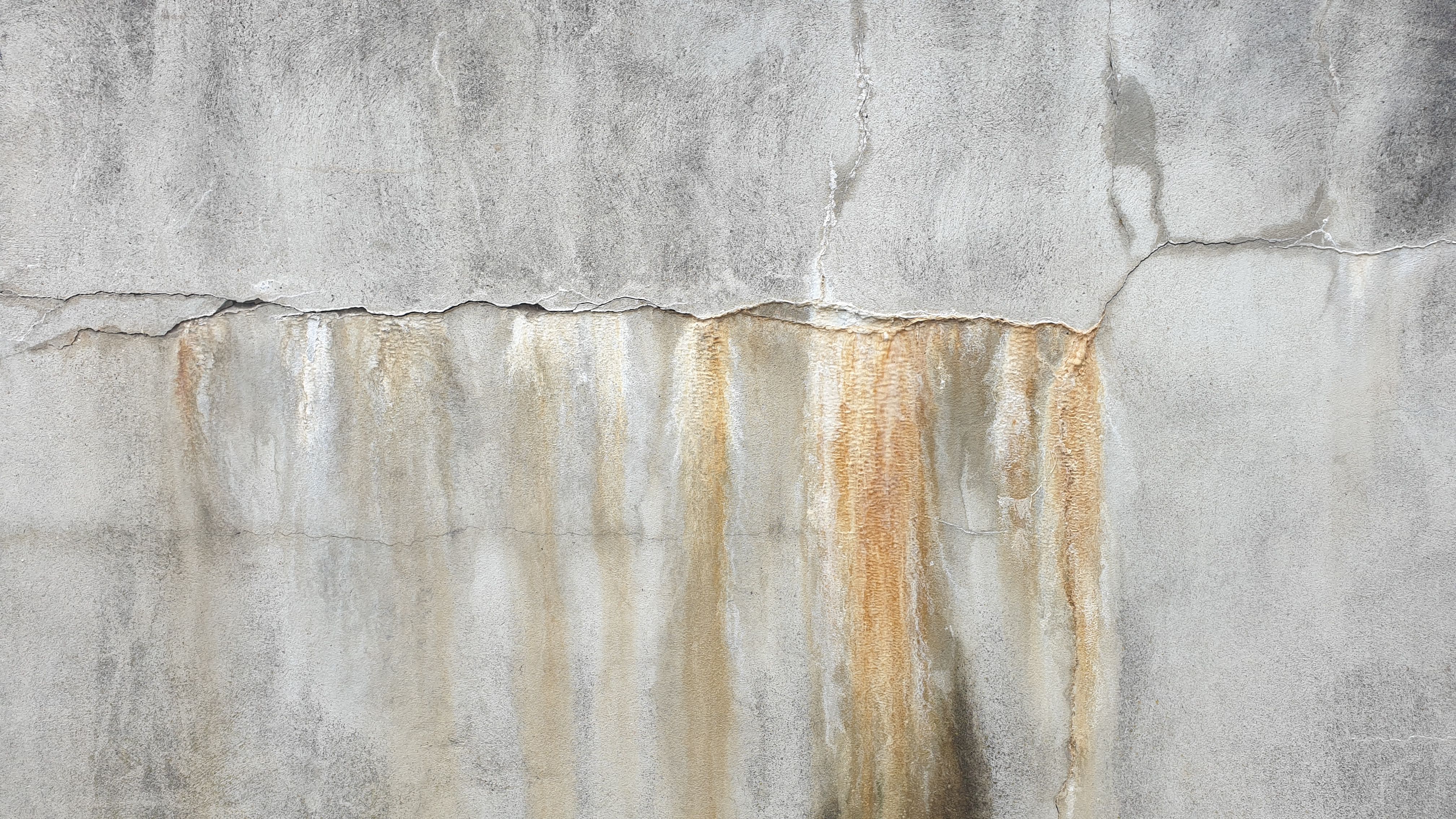
Brown or reddish stains appearing on concrete surfaces often indicate corrosion within the reinforcement.
These stains are typically carried to the surface by moisture migrating through cracks and pores.
Cracking
As corrosion products expand, they generate tensile stresses within the concrete.
Because concrete has limited tensile strength, cracks begin to form.
Longitudinal cracks that follow the alignment of reinforcing bars are particularly concerning.
Delamination
Delamination occurs when layers of concrete separate internally due to corrosion pressure.
The concrete may appear intact externally while hidden voids develop beneath the surface.
Spalling
Spalling is one of the most recognizable symptoms of advanced corrosion.
Sections of concrete break away, exposing reinforcing steel.
Once reinforcement becomes exposed, corrosion often accelerates due to direct contact with the environment.
Surface Deformation
Bulging or uneven concrete surfaces may indicate expansion caused by corroding reinforcement beneath the surface.
These deformations should never be ignored, particularly in load-bearing elements.
Structural Consequences of Corrosion
Corrosion affects far more than the appearance of a structure.
Its primary danger lies in the progressive reduction of structural capacity.
Loss of Steel Cross-Section
Corrosion consumes steel.
As reinforcement loses material, its ability to resist tensile forces decreases.
Even moderate reductions in steel cross-sectional area can significantly reduce structural performance.
Beams may lose bending resistance, columns may experience reduced load-carrying capacity, and slabs may become vulnerable to excessive deflection.
Reduced Bond Strength
The bond between concrete and reinforcing steel is essential for structural behaviour.
Corrosion products disrupt this bond.
As bond strength declines, the reinforcement becomes less effective at transferring loads.
This can lead to cracking, excessive movement, and reduced structural reliability.
Increased Cracking
Corrosion-induced cracking creates pathways for additional moisture, oxygen, and contaminants.
This accelerates deterioration and creates a self-perpetuating cycle of damage.
Structures that initially experience minor cracking may rapidly deteriorate if repairs are delayed.
Reduced Service Life
Every structure is designed with an anticipated lifespan.
Corrosion shortens this lifespan by accelerating deterioration and increasing maintenance requirements.
Without intervention, structures may require major rehabilitation decades earlier than originally planned.
Safety Risks
Advanced corrosion can create serious safety concerns.
Falling concrete fragments pose hazards to occupants and pedestrians.
In severe cases, weakened structural elements may experience partial or complete failure.
Although catastrophic failures are relatively rare, they become increasingly likely when corrosion remains unchecked for extended periods.
Corrosion Challenges in South Africa
South Africa presents several unique conditions that contribute to reinforcement corrosion.
Coastal Environments
Cities such as Durban, Cape Town, East London, Port Elizabeth, and Richards Bay are exposed to salt-laden marine air.
Chloride penetration is a major concern for structures located near the coastline.
Buildings several kilometres inland may still experience elevated chloride exposure due to prevailing winds.
Aging Infrastructure
Many public and private structures throughout South Africa are approaching or exceeding their original design life.
Deferred maintenance often allows corrosion problems to progress undetected.
Bridges, municipal infrastructure, parking facilities, and older commercial buildings are particularly vulnerable.
Water Management Issues
Poor drainage, leaking roofs, plumbing failures, and inadequate waterproofing contribute significantly to corrosion.
Water intrusion remains one of the most common causes of structural deterioration in buildings across the country.
Industrial Exposure
Industrial centres such as Johannesburg, Sasolburg, Secunda, and various mining regions expose structures to aggressive environmental conditions.
Chemical contaminants and pollution can accelerate both concrete degradation and steel corrosion.
Economic Impact of Corrosion
Corrosion represents a substantial financial burden for the construction industry.
Repairing corrosion damage is often significantly more expensive than preventing it.
Costs may include:
-
Structural investigations
-
Concrete repairs
-
Reinforcement replacement
-
Protective coatings
-
Waterproofing systems
-
Structural strengthening
-
Temporary building closures
-
Operational disruptions
For commercial property owners, corrosion-related repairs can lead to lost revenue, increased maintenance budgets, and reduced property values.
Preventive maintenance consistently delivers better long-term financial outcomes than reactive repairs.
Inspection and Assessment Methods
Professional assessment is essential when corrosion is suspected.
Engineers and building maintenance specialists use several techniques to evaluate reinforced concrete structures.
Visual inspections remain the first step.
However, advanced testing methods often provide more accurate information.
These may include cover meter surveys, carbonation testing, chloride analysis, half-cell potential measurements, concrete resistivity testing, ultrasonic evaluation, and core sampling.
The goal is to determine the extent of deterioration before developing an appropriate repair strategy.
Accurate diagnosis prevents unnecessary repairs and ensures that underlying causes are properly addressed.
Repairing Corrosion Damage
Repair strategies depend on the severity of deterioration.
Minor issues may require localized repairs, while advanced corrosion can necessitate extensive rehabilitation.
Common repair procedures include removing damaged concrete, cleaning or replacing corroded reinforcement, restoring concrete cover, and applying protective systems.
Specialized repair mortars are frequently used to rebuild damaged sections.
Protective coatings may also be applied to reduce future moisture and contaminant penetration.
In severe cases, structural strengthening techniques may be required to restore capacity.
Preventing Corrosion in Reinforced Concrete
Preventing corrosion begins during design and construction.
Proper material selection, quality control, and detailing significantly influence long-term durability.
Adequate concrete cover over reinforcement provides an important protective barrier.
Low-permeability concrete reduces the movement of water and contaminants.
Waterproofing systems help prevent moisture ingress.
Regular maintenance remains equally important.
Routine inspections can identify cracks, leaks, drainage issues, and coating failures before significant damage develops.
Prompt repairs prevent minor defects from evolving into major structural problems.
Building owners who implement proactive maintenance programmes generally experience lower lifecycle costs and improved structural reliability.
The Role of Building Maintenance
Building maintenance plays a critical role in corrosion prevention.
Maintenance teams are often the first to identify warning signs of deterioration.
Regular inspections of roofs, balconies, façades, parking structures, retaining walls, and exposed concrete surfaces help detect problems early.
Waterproofing systems should be maintained consistently.
Drainage systems must remain functional.
Cracks should be investigated and repaired promptly.
Protective coatings should be monitored and renewed when necessary.
A structured maintenance programme extends service life and reduces the likelihood of expensive structural repairs.
Corrosion of reinforcing steel is one of the most significant threats to reinforced concrete structures in South Africa. While the process often begins invisibly, its consequences can be severe. Loss of steel strength, reduced bond performance, cracking, spalling, shortened service life, and increased safety risks all stem from unchecked corrosion activity.
Environmental conditions such as coastal exposure, industrial pollution, moisture intrusion, and aging infrastructure make corrosion a widespread concern throughout the country. The structural consequences extend beyond aesthetics, affecting the safety, durability, and economic value of buildings and infrastructure.
Fortunately, corrosion is largely manageable through proper design, quality construction practices, routine inspections, and proactive maintenance. Early intervention remains the most effective strategy for protecting reinforced concrete structures and ensuring they continue to serve their intended purpose for decades to come.
By understanding the causes and consequences of corrosion, property owners, contractors, facility managers, and maintenance professionals can make informed decisions that preserve structural integrity and reduce long-term repair costs.