Electrical Issues in Older SA Homes Explained
Older homes in South Africa carry a kind of architectural memory. Timber, plaster, brickwork that has settled into decades of weather, and electrical systems that have quietly tried to keep up with modern life. The trouble is that electricity does not age gracefully. It stretches, overheats, fatigues, and eventually starts showing its limits in ways that are subtle at first, then suddenly inconvenient, and sometimes dangerous.
In the construction and maintenance world, electrical systems in aging homes are often described as “hidden infrastructure risk”. Unlike cracked tiles or leaking roofs, electrical deterioration stays behind the walls until it decides to announce itself loudly. Understanding the most common issues is not just technical awareness. It is practical protection for homeowners, tenants, and property investors across South Africa.
Why Older Electrical Systems Struggle to Keep Up
Many South African homes built before the early 2000s were designed for a very different electrical reality. At the time, households had fewer appliances, lower cumulative load demands, and far less dependence on continuous power supply.
Fast forward to today and the average home now supports televisions in multiple rooms, high-capacity fridges, microwaves, air conditioners, heaters, washing machines, computers, routers, and an ever-growing list of chargers and electronics. The electrical system that once comfortably powered a few lights and sockets is now expected to behave like a modern distribution grid.
This mismatch between design capacity and actual demand is where most problems begin.
Older wiring insulation degrades over time. Connections loosen due to thermal cycling. Components that were once compliant with older standards no longer meet current safety requirements under South African National Standards (SANS). The result is a system that still functions, but not always safely or efficiently.
Outdated Wiring and Insulation Breakdown
One of the most common issues in older homes is simply aged wiring. In many South African properties, especially those built several decades ago, cabling materials such as rubber-insulated or early PVC wiring were used. These materials deteriorate over time due to heat, moisture, and natural chemical breakdown.
As insulation becomes brittle, wires lose their protective layer. This increases the risk of short circuits, arcing, and electrical fires. The danger is not always visible. A wall socket may appear perfectly normal while the wiring behind it is already compromised.
In coastal regions like Cape Town and Durban, humidity and salt exposure accelerate this deterioration. Inland areas are not immune either, especially where roof leaks or condensation introduce moisture into ceiling voids and wall cavities.
Upgrading wiring is rarely a cosmetic decision. It is a structural intervention into the home’s safety core.
Overloaded Circuits and Modern Appliance Demand
A typical issue in older South African homes is circuit overload. Many properties were designed with far fewer distribution points than modern households require. It is not unusual to find a single circuit feeding multiple bedrooms or an entire section of a house.
When too many appliances draw power from a single circuit, the system becomes strained. This results in frequent tripping of breakers, dimming lights when appliances start up, and in some cases overheating behind walls or in distribution boards.
The rise of high-consumption appliances has made this worse. Electric kettles, heaters, air conditioners, and geysers are particularly demanding. When used simultaneously on outdated circuits, the system often reaches its limit quickly.
Electricians in South Africa frequently recommend redistributing loads across additional circuits as part of upgrade planning. This is not about convenience alone. It is about preventing long-term stress on infrastructure that was never designed for current demand levels.
Fuse Boxes Still in Circulation
Although circuit breakers are now standard in modern homes, many older properties still rely on fuse boxes. These systems use replaceable fuses that melt when overloaded, cutting the circuit.
While functional, fuse boxes are outdated by modern safety standards. They provide less precise protection and require manual replacement after each fault. In practice, this often leads to homeowners inserting incorrect fuse ratings or bypassing safety measures entirely, which introduces serious risk.
Another issue is that fuse-based systems do not always respond quickly enough to modern electrical faults, particularly those involving sensitive electronic devices or complex load fluctuations.
Upgrading from fuse boxes to modern distribution boards with residual current devices (RCDs) is one of the most impactful safety improvements in older homes. It brings the system closer to current SANS compliance and significantly improves fault detection.
Lack of Earth Leakage Protection
Earth leakage protection, commonly provided by RCDs or ELCBs, is designed to detect current leakage and immediately disconnect power to prevent electrocution. Many older homes in South Africa either lack this protection entirely or have outdated versions that no longer function effectively.
Without earth leakage protection, a fault that energises metal surfaces or appliances can become extremely dangerous. This is particularly concerning in kitchens, bathrooms, and outdoor areas where moisture increases conductivity.
In practical terms, upgrading earth leakage systems is one of the most important safety priorities in electrical maintenance. It is not an optional enhancement. It is a fundamental layer of protection that modern building standards assume as default.
Deteriorating Switches, Sockets, and Fixtures
Electrical issues are not always hidden behind walls. In older homes, switches and sockets themselves often show signs of ageing. Loose fittings, cracked faceplates, and warm outlets are all indicators of underlying wear.
Over time, repeated plugging and unplugging of devices loosens internal contacts. Heat generated by poor connections accelerates deterioration. In some cases, homeowners may notice sparking when inserting plugs or a faint burning smell near outlets.
These symptoms should never be ignored. While they may appear minor, they often indicate deeper wiring issues or overloaded circuits.
Replacing outdated fittings with modern, compliant components is a relatively simple upgrade compared to rewiring an entire home, yet it plays a significant role in improving everyday electrical safety.
Hidden Junction Box Problems
Junction boxes are often concealed in ceilings or behind walls, where multiple wires connect and distribute power. In older homes, these junction points may have been installed using outdated methods such as twisted connections without proper connectors or insulation.
Over time, these joints loosen due to thermal expansion and contraction. A loose junction can create resistance, which generates heat. This heat can build up silently, increasing fire risk without any obvious external signs.
One of the challenges in South African home maintenance is that these junctions are rarely inspected unless a specific fault occurs. This makes preventative electrical inspections particularly important in older properties.
Qualified electricians often identify junction box deterioration during routine maintenance or renovation work, especially when ceilings are opened for unrelated repairs.
Aluminium Wiring in Some Older Installations
While copper wiring is the standard today, some older South African homes may still contain aluminium wiring, particularly in specific construction periods or cost-sensitive developments.
Aluminium conducts electricity differently from copper and is more prone to oxidation. Over time, this oxidation increases resistance at connection points, leading to heat buildup. If not properly maintained, aluminium connections can become a fire hazard.
Modern upgrades typically involve either replacing aluminium wiring entirely or using approved connectors designed to mitigate oxidation risks. This is not a minor detail. It is a structural safety consideration that should be assessed during any major electrical renovation.
Poor DIY Modifications Over Time
One of the more unpredictable issues in older homes is accumulated DIY electrical work. Over decades, homeowners may have added extensions, moved sockets, installed additional lighting, or modified circuits without full compliance.
These informal modifications often lack proper load calculation or safe connection methods. The result is a patchwork system where some sections are compliant and others are not.
Electricians frequently describe these systems as “layered history wiring”, where each generation of modification adds complexity and potential risk. Identifying and correcting these inconsistencies is a key part of restoring electrical integrity in older homes.
Insufficient Capacity for Modern Distribution Boards
Even when older homes have been upgraded to circuit breakers, the distribution board itself may still be undersized. A common issue is too few circuits for the actual number of electrical loads in the home.
Modern electrical design typically separates lighting, sockets, kitchen appliances, geysers, and high-load devices into distinct circuits. Older systems often combine multiple functions into a single breaker.
This leads to nuisance tripping and makes fault detection more difficult. When a breaker trips, it may disconnect multiple rooms or functions at once, making troubleshooting more complex.
Upgrading the distribution board to accommodate modern circuit separation is one of the most effective ways to improve both safety and usability.
Voltage Fluctuations and Power Quality Issues
South Africa’s broader electrical grid challenges can also impact older homes more severely than newer installations. Voltage fluctuations, load shedding recovery surges, and inconsistent supply can expose weaknesses in ageing wiring.
Older systems often lack surge protection or voltage regulation, which means sensitive electronics are more vulnerable to damage. Repeated exposure to these fluctuations can also accelerate wear on wiring insulation and connection points.
Installing surge protection devices at the distribution board level is increasingly recommended as part of modern upgrade strategies. It acts as a buffer between external grid instability and internal home systems.
Moisture Intrusion and Electrical Degradation
Moisture is one of the most persistent threats to electrical systems in South African homes. Roof leaks, rising damp, and poor sealing around exterior fittings can allow water to enter electrical conduits or junction points.
Once moisture enters the system, it can cause corrosion of metal components, insulation breakdown, and intermittent faults that are difficult to diagnose.
In coastal regions, salt-laden air can compound this issue, slowly corroding external fixtures and conduit fittings even without direct water exposure.
Preventative maintenance that addresses both roofing and electrical integrity is essential, as these systems are deeply interconnected.
Thermal Stress and Seasonal Load Variation
South Africa’s seasonal temperature variations also place stress on electrical systems. During colder months, increased use of heaters leads to higher sustained loads. In summer, air conditioning systems create similar spikes.
Older wiring that is already operating near capacity can struggle under these seasonal peaks. Thermal stress causes expansion and contraction of conductors and connections, gradually weakening them over time.
This is one of the reasons electrical issues often appear suddenly during seasonal transitions. The system is not failing instantly, but reaching a tipping point after prolonged stress.
Upgrade Priorities for Older Homes
When approaching electrical upgrades in older South African homes, prioritisation is essential. Not all issues need to be addressed at once, but some carry significantly higher risk than others.
The most critical starting point is safety protection. This includes earth leakage systems, circuit breakers, and proper grounding. Without these, the system lacks basic defensive mechanisms.
Next comes load distribution and capacity planning. Ensuring that circuits are properly separated and rated for modern appliance use reduces strain and improves reliability.
Wiring replacement is typically the most invasive upgrade, but often necessary in homes with severely aged or degraded insulation. This is especially important where aluminium wiring or heavily modified DIY systems are present.
Finally, improvements such as surge protection, updated sockets, and improved fixtures enhance day-to-day usability and protect long-term investment in appliances and electronics.
The Role of Professional Electrical Inspections
In the context of building maintenance in South Africa, professional electrical inspections are one of the most valuable preventative tools available. Unlike visible maintenance issues, electrical faults often develop silently.
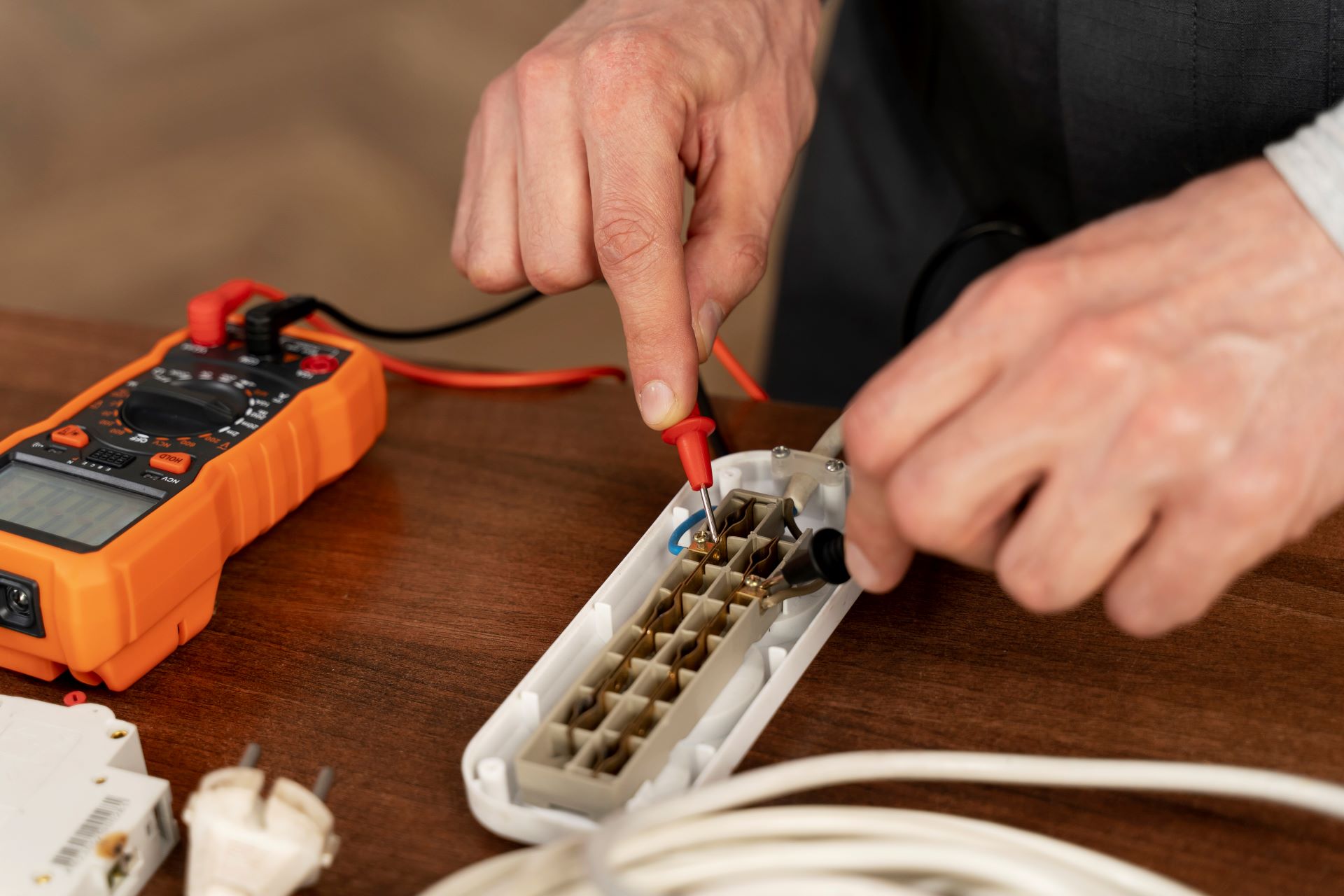
A qualified inspection can identify early warning signs such as heat anomalies, loose connections, outdated compliance, and overloaded circuits before they become critical failures.
For homeowners, landlords, and property developers, these inspections are not just regulatory exercises. They are part of responsible infrastructure stewardship.
Conclusion: Safety Begins Behind the Walls
Electrical systems in older homes are like the nervous system of a building that has lived many lives. They carry history, adaptation, and sometimes compromise.
The most common issues are not random failures. They are predictable outcomes of ageing infrastructure meeting modern demand. From outdated wiring and overloaded circuits to insufficient protection systems, each issue tells part of a larger story about how homes evolve over time.
Understanding these problems is the first step. Addressing them in a structured, priority-driven way is what transforms an ageing electrical system from a hidden risk into a reliable backbone for modern living in South Africa.