
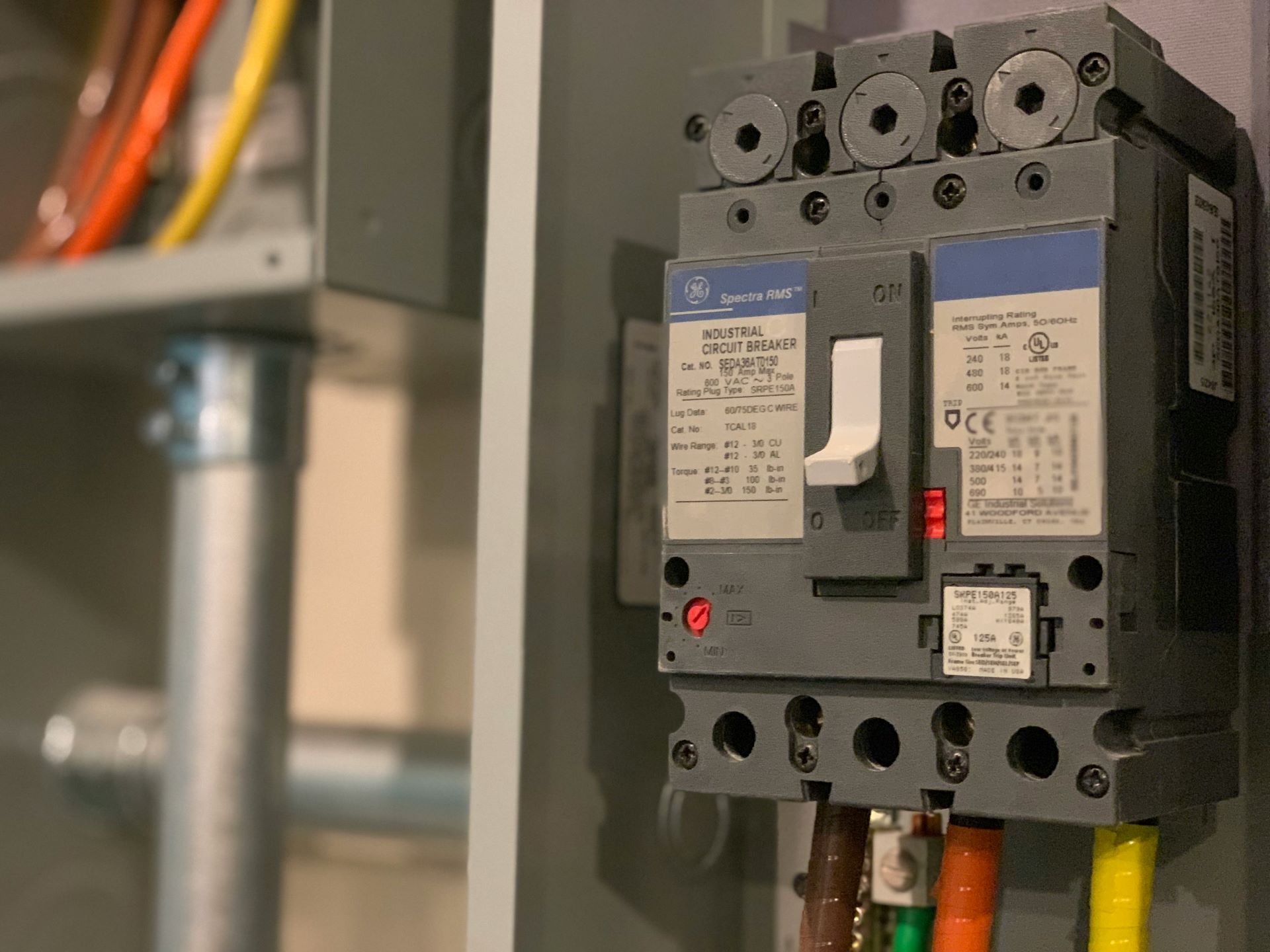
Electrical Compliance Certificates Explained in SA
The Certificate Behind the Wall Socket
An electrical compliance certificate often feels like a simple administrative requirement. A document signed, stamped, filed, and forgotten. But in South African construction and building maintenance, it is far more than paperwork. It is a technical snapshot of an entire electrical installation’s health, safety integrity, and legal standing.
In practical terms, it is the formal confirmation that a building’s electrical system meets the requirements of the Occupational Health and Safety Act and aligns with the South African National Standards, particularly SANS 10142-1, which governs low-voltage installations.
Every light switch, plug point, distribution board, and earth conductor in a building is quietly represented in that certificate. It is not just a signature of approval. It is a declaration that the system will not become a hazard under normal use.
For contractors, landlords, facilities managers, and homeowners, understanding what this certificate actually covers is essential. Not because of bureaucracy, but because it sits at the intersection of safety, liability, and infrastructure reliability.
Why Certification Exists in the First Place
Electricity is invisible, which is precisely what makes it dangerous. Unlike a cracked wall or leaking pipe, electrical faults often remain hidden until they escalate into shock incidents, equipment damage, or fire.
South Africa’s regulatory framework exists to prevent that silent risk from accumulating unchecked. The Certificate of Compliance, commonly referred to as a CoC, is the mechanism that enforces accountability.
Its purpose is not to approve buildings in a general sense, but to verify that the electrical installation is safe at a specific point in time. That distinction matters. A CoC does not guarantee future safety. It guarantees that, at the time of inspection, the installation met the required standards.
In construction and maintenance environments, this creates a continuous responsibility cycle. Install, test, certify, maintain, and eventually re-certify after alterations or faults.
Without this system, buildings would accumulate invisible electrical degradation over time, turning small oversights into large-scale hazards.
The Legal Framework That Shapes Electrical Compliance
Electrical compliance in South Africa is governed primarily by the Occupational Health and Safety Act, supported by the Electrical Installation Regulations. These legal instruments require that every electrical installation be inspected and certified by a registered person.
Alongside legislation, SANS 10142-1 provides the technical rulebook. It defines how installations must be designed, installed, and tested to ensure safety and performance.
This combination of law and technical standard creates a dual layer of enforcement. The law mandates compliance, while the standard defines how compliance is achieved.
For construction professionals, this means that electrical work is never just about functionality. It is about conformity to a national safety benchmark that is legally enforceable.
Municipalities and insurance providers also rely on this framework. Without a valid CoC, properties may face challenges in being sold, insured, or legally occupied after major electrical changes.
What an Electrical Compliance Certificate Actually Covers
The scope of a CoC is often misunderstood. It does not simply confirm that lights turn on or that sockets are functional. It covers a structured evaluation of the entire electrical installation.
At its core, the certificate confirms that:
The installation is safe for intended use under normal operating conditions
The system complies with SANS 10142-1 requirements
Protective devices are correctly installed and functional
Wiring is correctly rated, routed, and protected
Earthing and bonding systems are effective and continuous
The distribution board is correctly configured and labelled
Each of these areas involves technical testing, not visual inspection alone. This includes continuity testing, insulation resistance testing, polarity checks, earth fault loop impedance testing, and verification of protective device operation.
In construction and building maintenance environments, these tests reveal issues that are often invisible during installation. A cable may be correctly installed but poorly terminated. A circuit may function but lack proper earth continuity. A distribution board may operate but not provide adequate protection against overload conditions.
The CoC brings all of this into a single compliance outcome.
The Role of Inspection in Electrical Safety
Inspection is the foundation of certification. Before any testing begins, a qualified electrician must visually assess the installation.
This stage focuses on installation quality, workmanship, and adherence to design principles. It includes checking cable routes, ensuring proper mechanical protection, verifying that no exposed conductors are present, and confirming that equipment is appropriately rated for its environment.
In building maintenance, inspection also reveals deterioration over time. Heat damage in distribution boards, loose terminations, corrosion in outdoor enclosures, and wear on insulation are common findings in older properties.
Inspection is not passive observation. It is a structured evaluation that often determines whether further testing will reveal compliance or failure.
In many cases, inspection alone can identify major safety risks before electrical testing even begins.
Electrical Testing: The Technical Core of Certification
Once inspection is complete, testing provides the technical proof required for certification. This is where electrical compliance becomes measurable rather than observational.
Insulation resistance testing ensures that current does not leak between conductors or to earth. This is essential in preventing electric shock and fire hazards.
Continuity testing confirms that protective earth conductors are properly connected throughout the installation. Without continuity, fault currents cannot safely discharge, increasing the risk of live metal components.
Polarity testing verifies that wiring connections are correctly assigned, ensuring that switches isolate live conductors rather than neutral conductors.
Earth fault loop impedance testing evaluates whether protective devices will trip fast enough during a fault condition. This is critical for preventing prolonged exposure to dangerous voltages.
In practical construction environments, these tests often reveal hidden installation errors. A cable damaged during building works, a loose termination inside a junction box, or incorrect circuit allocation in a distribution board can all be uncovered at this stage.
Testing transforms assumptions into verified safety data.
Distribution Boards: The Control Centre of Compliance
The distribution board is often the most important single component in an electrical installation. It is where power is divided, controlled, and protected.
A compliance inspection examines whether the board is correctly organised, labelled, and equipped with appropriate protective devices.
Residual current devices, commonly known as earth leakage protection units, are a critical component. They are designed to disconnect power rapidly in the event of leakage currents, protecting users from electric shock.
Circuit breakers must also be correctly rated for their respective loads. Oversized breakers can fail to trip during overload conditions, while undersized breakers may trip unnecessarily, disrupting building operations.
In building maintenance environments, distribution boards often evolve over time. Additional circuits are added, loads increase, and systems are modified without full redesign. This can lead to imbalance, overcrowding, and compromised protection.
A compliance certificate ensures that these changes have not introduced hidden risks.
Earthing and Bonding: The Invisible Safety Network
Earthing and bonding are among the most critical yet least visible aspects of electrical safety. They form the backbone of fault protection in any installation.
Earthing provides a safe path for fault current to return to ground. Bonding ensures that all conductive parts within a building share the same electrical potential, reducing the risk of voltage differences.
In construction and maintenance contexts, poor earthing is a recurring issue, especially in older buildings where systems may have been extended or modified multiple times.
A compliance inspection checks continuity of earth conductors, resistance levels, and connection integrity. It also verifies that metallic water pipes, structural steel, and other conductive elements are correctly bonded where required.
Without proper earthing and bonding, even a well-functioning electrical system can become dangerous under fault conditions.
Common Compliance Failures in South African Buildings
Electrical non-compliance is more common than many property owners realise. It often develops gradually through modifications, wear, and informal repairs.
Some of the most frequent issues include:
Overloaded circuits caused by added appliances or equipment
Incorrect or missing earth connections
Damaged insulation due to heat, age, or mechanical stress
Unlabelled or poorly organised distribution boards
Non-compliant extensions and DIY electrical work
Faulty or absent residual current devices
These issues are not always immediately visible. A building may appear fully operational while still being electrically unsafe.
In commercial and industrial environments, the risk is amplified by higher loads and more complex systems. Regular compliance checks become essential to prevent system degradation.
Certification During Construction vs Existing Buildings
Electrical compliance certification functions differently depending on whether a building is newly constructed or already occupied.
In new construction, certification is typically issued after full installation and testing. It confirms that the system meets standards before energisation or occupation.
In existing buildings, certification is required after alterations, additions, or significant repairs. It is also commonly required during property transfer processes.
Maintenance environments introduce additional complexity. Electrical systems may be partially upgraded while older sections remain in use. This hybrid state requires careful testing to ensure overall system integrity.
The key principle is that any meaningful change to an electrical installation triggers the need for re-evaluation and potential recertification.
The Human Element Behind Compliance
While regulations and standards define the framework, electrical compliance ultimately depends on qualified professionals applying technical judgment.
Registered electricians and electrical contractors are responsible for ensuring that installations meet both legal and practical safety requirements. Their role is not only to install systems, but to interpret standards in real-world construction conditions.
This is particularly important in older buildings where infrastructure may not align neatly with modern requirements. In these cases, compliance often involves adaptation, upgrading, and risk mitigation rather than simple verification.
Human expertise bridges the gap between technical standards and physical reality.
Why Compliance Is a Maintenance Strategy, Not a Document
One of the most important misconceptions in building management is treating the Certificate of Compliance as a final administrative step.
In reality, it is part of an ongoing maintenance cycle. Electrical systems age, loads change, and environmental conditions affect performance.
A CoC represents a moment in time, but safe operation depends on continuous maintenance and periodic reassessment.
For facilities managers and property owners, this means integrating electrical inspections into broader maintenance planning. It is not separate from building upkeep. It is a core component of it.
When treated correctly, compliance becomes a preventative strategy rather than a reactive obligation.
The Real-World Value of Electrical Compliance
Beyond legal requirements, electrical compliance delivers tangible operational benefits.
It reduces the risk of electrical fires, which are often caused by hidden faults
It improves system reliability by identifying failing components early
It supports insurance validity and claims processing
It enhances property value during sales or leasing
It ensures occupant safety in residential, commercial, and industrial spaces
In construction and maintenance industries, these outcomes translate into reduced downtime, lower risk exposure, and improved long-term asset performance.
Compliance is not just about avoiding penalties. It is about ensuring that electrical infrastructure performs safely and predictably over time.
The Future of Electrical Compliance in South Africa
As buildings become more complex, with increased reliance on automation, renewable energy integration, and smart systems, electrical compliance is evolving.
Future inspections will increasingly need to account for hybrid systems involving solar power, battery storage, and intelligent load management.
This will expand the scope of certification beyond traditional wiring and distribution systems. It will require more advanced testing methodologies and deeper technical expertise.
In South Africa’s construction and maintenance landscape, this evolution is already underway. Electrical compliance is no longer static. It is becoming a continuously adapting discipline.
Certification as a Living Safety System
An electrical compliance certificate is often seen as a simple requirement at the end of a project. In reality, it is a structured safety verification system embedded within South African construction and maintenance practice.
It confirms that electrical installations are not only functional but safe, compliant, and correctly configured according to national standards.
More importantly, it represents accountability. Every test, inspection, and verification step contributes to a broader system designed to protect people, property, and infrastructure.
In the built environment, electricity is both essential and inherently risky. Compliance is what keeps that balance under control.
A certificate may be a document, but what it represents is far more enduring: a commitment to safety that runs through every wire in the walls.