
Coastal vs Inland Building Materials in South Africa
Construction Material Selection for South African Climates
South Africa does not offer a single, uniform climate for construction planning. It is a country stitched together from salt-heavy coastlines, arid interiors, humid subtropics, and high-UV plateaus. Each of these environments exerts its own quiet pressure on buildings, shaping how materials age, fail, and ultimately survive.
Material selection, therefore, is not simply a design decision. It is a long-term negotiation with climate, maintenance budgets, and structural resilience. What performs reliably in Johannesburg may degrade rapidly in Durban. What thrives inland may corrode prematurely on the Cape coast.
Understanding this difference is the foundation of durable construction.
The Environmental Divide: Coastal vs Inland Conditions
South Africa’s coastal and inland regions behave almost like two different countries when it comes to building stressors.
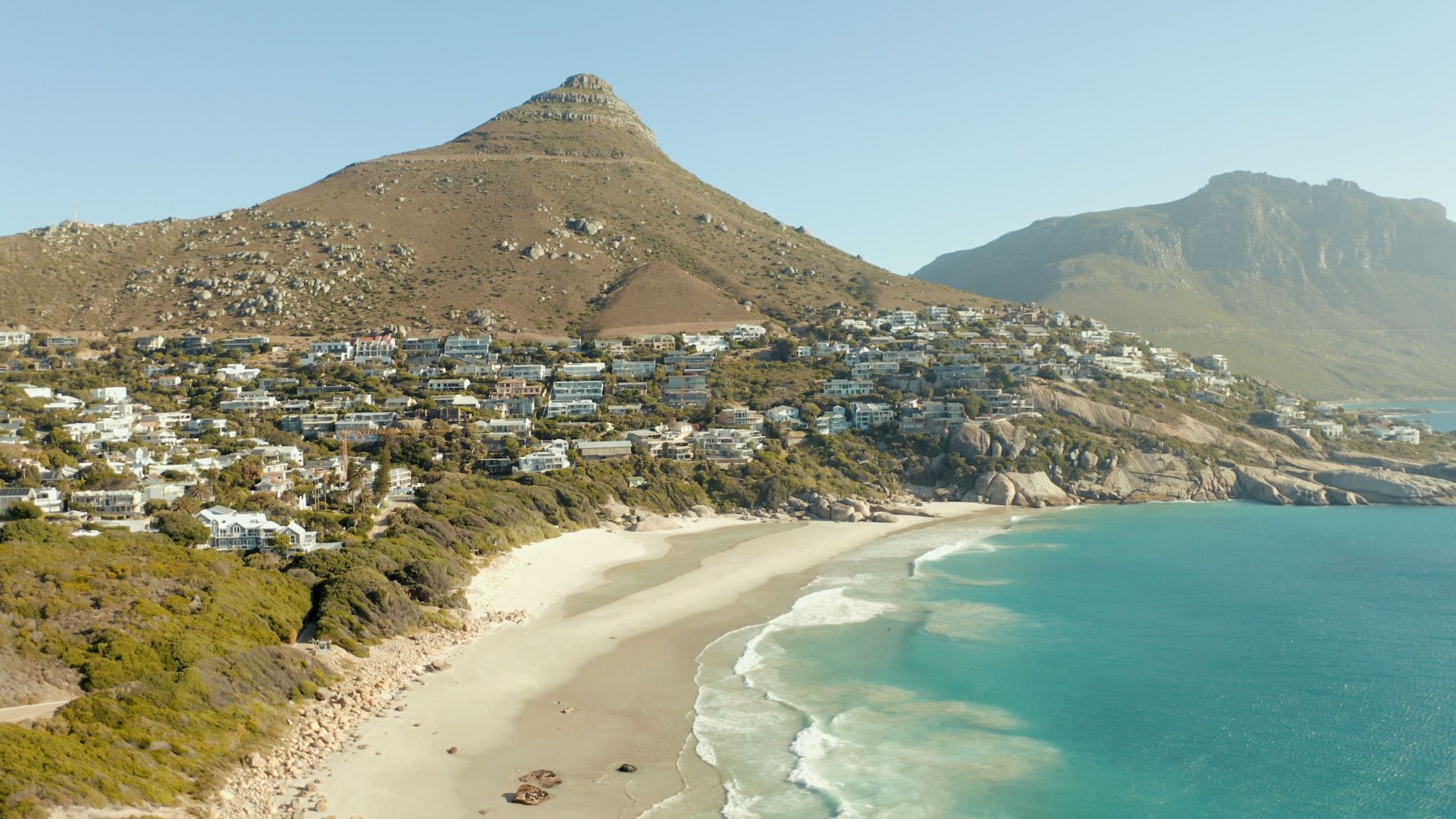
Coastal zones are defined by salt-laden air, high humidity, strong winds, and persistent moisture cycling. Salt particles travel far beyond the shoreline, accelerating corrosion even several kilometres inland. This creates an environment where metal fatigue, coating breakdown, and moisture ingress occur much faster than expected.
Inland regions, by contrast, are dominated by higher UV exposure, larger temperature fluctuations, and lower humidity. Materials tend to dry out more aggressively, expand and contract more dramatically, and suffer from UV-driven degradation rather than salt-induced corrosion.
The result is a clear divide:
coastal environments attack materials chemically, while inland environments stress them physically.
Coastal Construction: The Silent Pressure of Salt and Moisture
Coastal construction in South Africa demands respect for a highly aggressive atmospheric environment. Salt in the air acts like a catalyst for corrosion, accelerating oxidation in metals and weakening protective coatings over time.
Steel components are particularly vulnerable. Once salt penetrates protective layers, corrosion can spread beneath coatings, leading to blistering, flaking, and structural weakening. In reinforced concrete, chloride penetration can reach steel reinforcement, triggering internal expansion and cracking.
Humidity compounds the issue. Constant moisture prevents surfaces from fully drying, meaning corrosion processes rarely pause. Even paints and sealants struggle to cure or maintain adhesion in such conditions.
UV exposure adds another layer of stress. Coastal sunlight is often intensified by reflection from water and sand, accelerating polymer breakdown in coatings and plastics.
In this environment, durability is not achieved through a single material choice, but through layered protection systems and corrosion-aware design.
Inland Construction: Heat, UV, and Thermal Movement
While inland areas are spared the relentless salt exposure of the coast, they present their own challenges.
Highveld regions experience strong UV radiation and significant daily temperature swings. These conditions cause materials to expand during heat and contract during cooler nights. Over time, this repeated movement stresses joints, sealants, and rigid materials.
Paint systems inland often fail not because of moisture, but because UV radiation breaks down binders, leading to fading, chalking, and loss of adhesion. Roofing materials and exposed façades are especially affected.
Dust and airborne particulates also play a role, gradually wearing down finishes and affecting surface appearance. While corrosion is slower inland, mechanical and UV-driven degradation becomes the dominant form of wear.
In short, inland buildings are stretched, baked, and faded rather than corroded.
Structural Metals: The First Major Divergence
Metal performance reveals the clearest difference between coastal and inland environments.
Near the coast, standard mild steel is highly vulnerable unless heavily protected. Salt exposure accelerates rust formation, and even small coating defects can lead to rapid deterioration. Stainless steel, particularly marine-grade variants, and aluminium alloys are far more suitable due to their corrosion resistance.
Galvanised steel can still be used, but its lifespan depends heavily on coating thickness and environmental proximity to the shoreline.
In inland environments, galvanised steel performs more reliably. Corrosion rates are significantly lower, and protective coatings last longer due to reduced salt exposure. However, UV breakdown of coatings still requires attention, especially for exposed structural elements.
The distinction is simple but critical:
coastal steel fails from oxidation, inland steel fails from exposure fatigue.
Concrete Performance and Hidden Coastal Risk
Concrete is often assumed to be universally durable, but environmental context tells a different story.
Coastal concrete structures face chloride ingress, where salt penetrates the porous matrix and reaches embedded reinforcement steel. This triggers corrosion from within, causing expansion and eventual cracking or spalling.
Inland concrete avoids this chloride pathway but still experiences stress from thermal movement and UV exposure on surface layers. While degradation is slower, surface cracking and sealant fatigue can still occur if expansion joints are poorly designed.
The key difference lies in failure mode.
Coastal concrete often fails internally. Inland concrete fails externally.
Timber and Organic Materials: Moisture vs Dry Stress
Timber behaves differently depending on humidity levels, making it one of the most climate-sensitive construction materials.
Coastal regions expose timber to constant moisture cycling. Wood absorbs humidity, swells, and then partially dries, leading to repeated dimensional movement. Over time, this causes warping, joint failure, and increased susceptibility to fungal growth.
Inland timber faces a different challenge. Lower humidity combined with strong sunlight leads to drying and shrinkage. This can result in cracking, splitting, and surface checking, especially if protective coatings are not maintained.
In both environments, timber requires careful sealing, but the maintenance cycle differs significantly. Coastal timber demands moisture control, while inland timber demands UV protection.
Roofing Systems: Exposure from Above
Roofing materials are among the most climate-exposed elements of any structure, making them highly sensitive to regional differences.
Coastal roofs must resist salt spray, wind-driven moisture, and corrosion of fasteners and sheeting. Aluminium and high-performance coated steel systems are often preferred due to their resistance to oxidation.
In inland areas, roofing systems are more likely to suffer from hail impact, thermal cycling, and UV degradation. Coating flexibility and impact resistance become more important than salt resistance.
Even fasteners behave differently. Coastal fasteners must resist galvanic corrosion, while inland fasteners must tolerate movement and temperature stress.
Coatings, Sealants, and Surface Protection Systems
Protective coatings are the frontline defence in both environments, but their priorities shift dramatically.
Coastal coatings must focus on corrosion resistance, adhesion under high humidity, and salt tolerance. Surface preparation becomes critical, as even small amounts of salt contamination can undermine coating performance.
Inland coatings prioritise UV resistance and flexibility. As substrates expand and contract, rigid coatings are prone to cracking. Over time, this leads to moisture ingress and surface degradation.
Sealants also differ in performance requirements. Coastal sealants must remain stable under constant moisture exposure, while inland sealants must tolerate thermal movement without losing elasticity.
Maintenance Cycles: The Hidden Cost of Climate
Material selection cannot be separated from maintenance reality.
Coastal buildings require more frequent inspection cycles. Corrosion develops faster, coatings degrade sooner, and small defects escalate quickly. Preventive maintenance is essential rather than optional.
Inland buildings generally allow longer maintenance intervals, but neglect can still lead to UV and thermal damage accumulating over time.
The true cost of a material is not its purchase price, but its lifecycle behaviour under specific environmental stress.
Designing for South Africa’s Climate Diversity
South African construction cannot rely on universal material assumptions. A building in Cape Town, Durban, or Gqeberha exists in a fundamentally different stress environment than one in Pretoria or Johannesburg.
Successful material selection depends on aligning physical properties with environmental pressure. Coastal construction demands corrosion resistance and moisture control. Inland construction demands UV stability and thermal flexibility.
When these principles are respected, buildings last longer, require fewer interventions, and maintain structural integrity across decades.
When ignored, even high-quality materials can fail prematurely.
Matching Material to Environment
The central principle of construction material selection in South Africa is simple but powerful: materials do not fail randomly; they fail in conversation with climate.
Coastal environments accelerate chemical breakdown through salt and humidity. Inland environments accelerate mechanical and UV-driven fatigue. Each demands a tailored response.
The most durable buildings are not necessarily those built with the strongest materials, but those built with the most appropriately matched materials for their environment.
In South Africa’s diverse climate landscape, that distinction is everything.